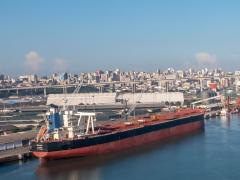
Shipping costs through the Strait of Hormuz face a potentially significant increase after US President Donald Trump announced a 20% charge on cargo transiting the strategic waterway.
Trump said the US would reinstate its naval blockade of Iran and seek reimbursement equivalent to 20% of the value of all cargo shipped through the strait to cover the costs of providing safety and security in the region, Reuters reported.
The process would begin immediately, Trump said, although details of how the charge would be calculated, collected or enforced have not been disclosed.
The announcement marks a renewed escalation in tensions between Washington and Tehran after military exchanges over the weekend disrupted hopes that commercial shipping through the key energy route would begin returning to normal.
The International Maritime Organization (IMO) has opposed the imposition of fees on vessels passing through straits used for international navigation.
“There is no legal basis through which to introduce mandatory tolls simply to transit through a strait,” an IMO spokesperson told Reuters.
Shipping industry officials have also raised concerns about the legality of the proposed charge and questioned whether it would improve the safety of vessels transiting Hormuz.
deVere Group chief executive Nigel Green has warned that the impact of the proposed charge could extend beyond the direct cost of moving cargo through the strait, particularly if higher costs and sanctions risks affect marine insurance.
“Premiums on Hormuz transits are already several times normal. Mix a toll in with sanctions risk and underwriters just stop writing cover. No insurance, no voyage. It won’t matter what either government announces,” Green said.
He argued that the proposed charge could also feed through to broader energy and transport costs.
“Whoever wins this fight over the toll, the bill lands on everyone else. About a fifth of the world’s oil and gas moves through Hormuz. Add a 20% charge on that and you’ve taxed global energy, full stop, no matter whose flag is on the toll booth.”
Green warned that the consequences could extend to diesel, fertiliser, plastics and electricity costs in markets far beyond the Middle East.