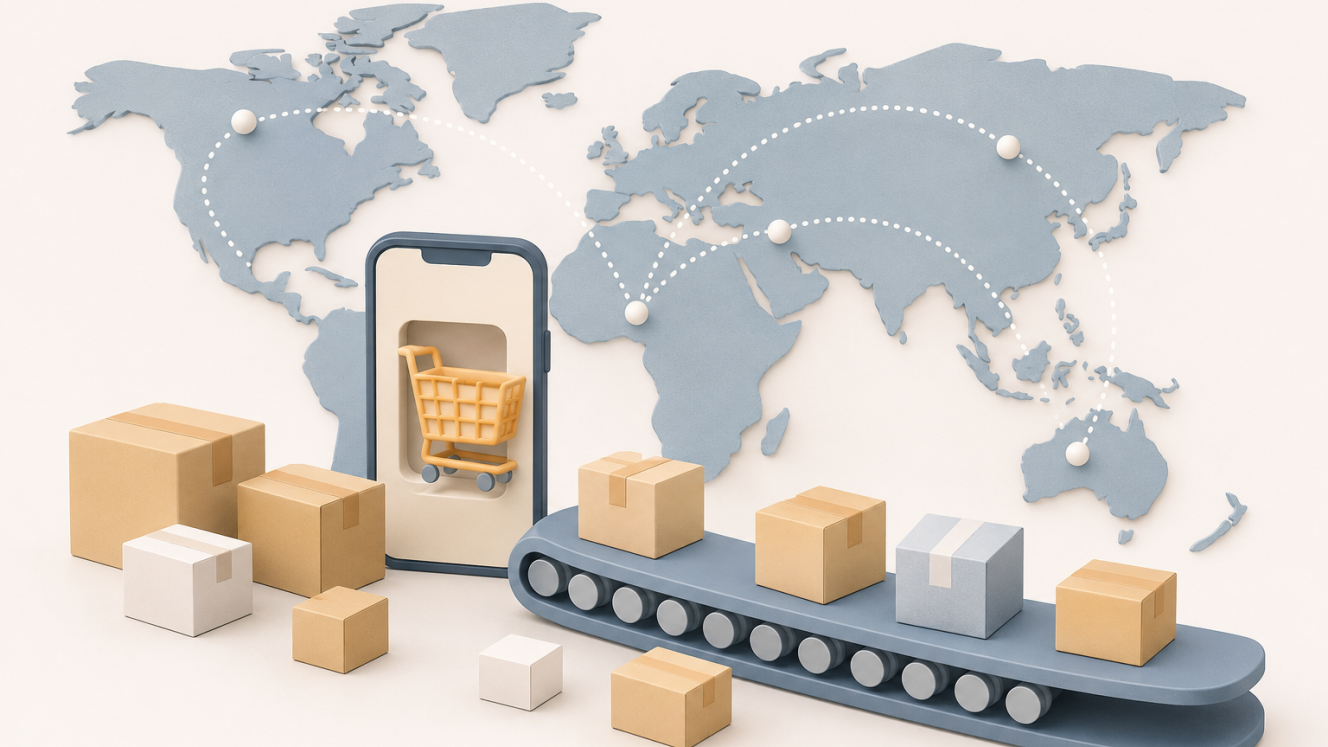
Cross-border illicit trade is increasingly shifting towards e-commerce channels, with online trade accounting for nearly half of all cases reported globally, according to the World Customs Organization (WCO).
The WCO’s Illicit Trade Report 2025, compiled from 163 850 cases submitted by 170 customs administrations, highlights the growing use of e-commerce, parcel, postal and express courier networks to move illicit goods across borders.
“This year’s edition further confirms the growing role of e-commerce as a significant channel for illicit trade, accounting for nearly half of all cases reported globally,” WCO Secretary General Ian Saunders said.
“This sustained and growing trend highlights a structural shift in the distribution of illicit goods, requiring adaptive and forward-looking responses from Customs administrations.”
The shift presents new enforcement challenges for customs authorities and logistics operators as small-volume shipments moving through parcel and postal networks make up a growing share of illicit trade cases.
More than 60% of reported cases involving counterfeit goods, illicit pharmaceuticals and cannabis were detected in parcel and postal delivery streams, according to the report.
SA features in illicit mineral flows
South Africa emerged as a significant departure point for illicit diamonds and semi-precious stones moving to markets in Asia and the Middle East.
The country operated “almost exclusively as a country of departure” in reported cases involving these commodities, the report said.
Southern Africa also featured prominently in global cannabis seizures.
Namibia ranked third globally by volume, with authorities intercepting 60.6 tonnes in 2025, while South Africa ranked ninth.
Globally, customs authorities reported seizures of 548.8 tonnes of cannabis during the year.
The WCO report also highlighted the growing movement of synthetic drugs through e-commerce and express delivery networks.
Reported seizures of new psychoactive substances doubled compared with the previous reporting cycle, while synthetic opioids, including fentanyl and related substances, continued to move through express shipping and postal channels.
The report also identified counterfeit and falsified medical products as a significant enforcement challenge in West and Central Africa, where parcel, postal and express courier networks are increasingly used to move small-volume shipments across borders.
WCO calls for closer cooperation
Saunders called for stronger cooperation between customs administrations and private-sector supply chain stakeholders to protect legitimate trade and transport networks.
“By enhancing information sharing, improving data quality, and supporting coordinated actions, we can reinforce our collective response to illicit trade,” he said.
The changing distribution of illicit goods required customs administrations to adapt enforcement strategies and strengthen cooperation with supply chain stakeholders as e-commerce and small-parcel trade continued to expand, the WCO said.