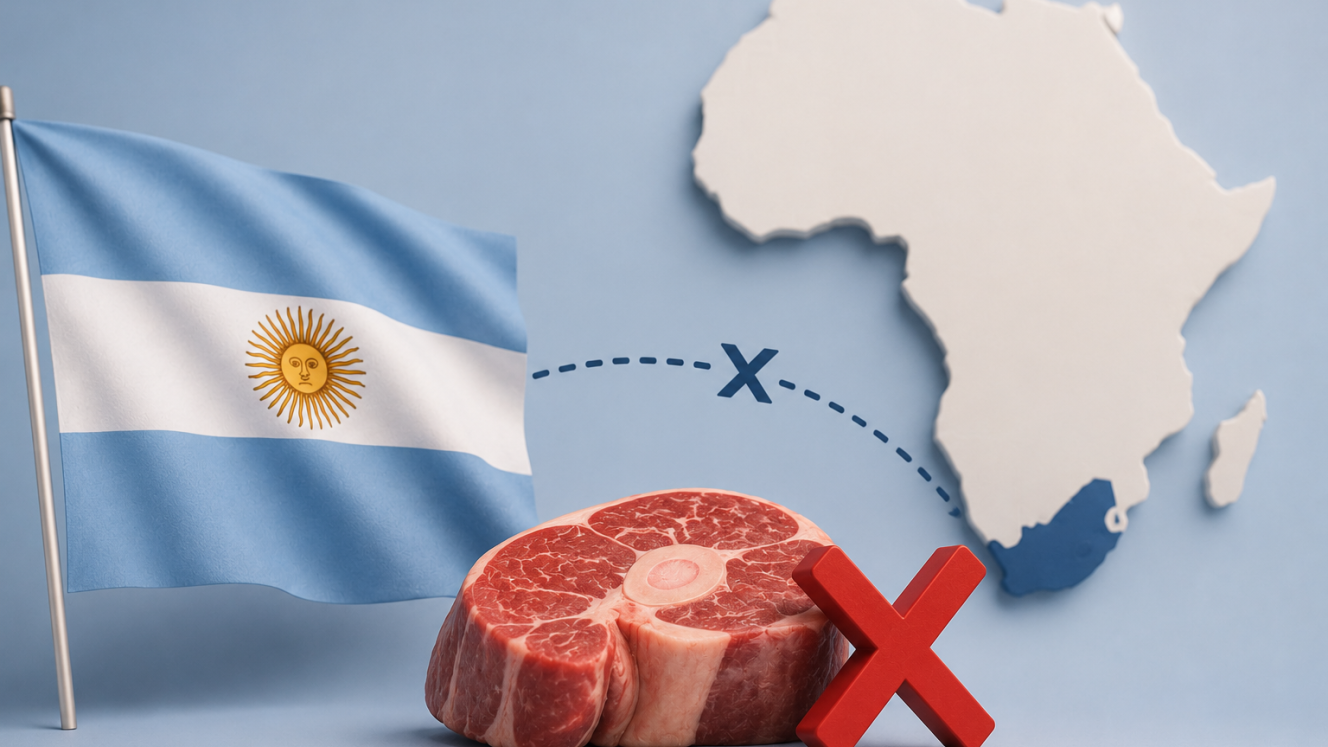
The prolonged disruption of Argentine oxtail imports has constrained supplies and contributed to a sharp increase in South African retail prices, according to the Association of Meat Importers and Exporters (AMIE).
Oxtail that sold for approximately R79-R99/kg between January and May is now retailing for about R169-R199/kg, the association said.
Argentina ordinarily supplies about 70% of South Africa’s imported oxtail, making it an important source for a market that cannot meet demand through domestic production alone.
AMIE CEO Paul Matthew said the association has formally asked the Department of Agriculture to provide the scientific evidence and risk assessments underpinning revised veterinary certification requirements that continue to prevent imports.
“When a major source of imported supply is effectively removed from the market, the result is scarcity and higher prices,” he said.
“If there is a legitimate food safety or animal health risk associated with Argentine oxtail, we support the department taking appropriate measures. But we need to understand what that risk is and the science behind it.”
Dispute remains unresolved
The import disruption was first reported by Freight News in July after an incorrect scrapie declaration was identified in the veterinary certificate for Argentine beef exports to South Africa.
Scrapie affects sheep and goats rather than cattle so Argentina requested removal of the declaration from the certificate.
The Department of Agriculture subsequently acknowledged that the inclusion of scrapie was a technical error and removed it. However, the revised certificate introduced additional requirements relating to foot-and-mouth disease (FMD), bovine spongiform encephalopathy and vesicular stomatitis.
Argentine establishments approved to export to South Africa are situated in an FMD-free zone where vaccination is practised. AMIE said these establishments could not supply oxtail and certain other bone-in beef products under the revised conditions.
In July, the Department of Agriculture told Freight News that negotiations with Argentina about a veterinary health certificate were close to being concluded although food safety measures still had to be agreed.
The impasse has nevertheless continued.
AMIE maintains that the revised requirements appear to exceed international animal health guidelines. World Organisation for Animal Health standards permit trade in meat from recognised FMD-free zones where vaccination is practised, subject to appropriate safeguards.
Argentina’s last reported FMD outbreaks occurred in February 2006 and the country has internationally recognised FMD-free zones, including areas where vaccination is practised.
Matthew said AMIE is not asking the government to weaken South Africa’s biosecurity measures.
“We are asking for measures to be transparent, proportionate to the actual risk and supported by recognised science,” he said.
AMIE has asked the Department of Agriculture to urgently reconsider the revised certification requirements. It has also proposed an interim arrangement based on the previously accepted certificate, with the inapplicable scrapie declaration removed, while broader technical issues are reviewed.
“What began as a relatively simple correction to a certificate has resulted in a much broader set of restrictions that continue to prevent trade with a significant impact on cash-strapped South African consumers,” Matthew said.