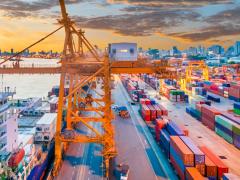
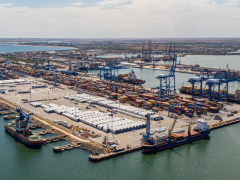
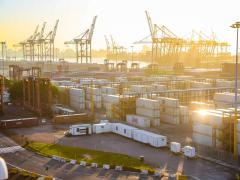
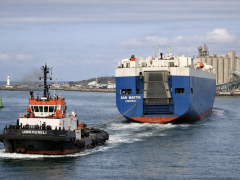
With South African ports running at close to their full installed capacity, shippers and shipping lines are being forced to look for alternatives, such as the new container terminal in Walvis Bay, which is due to be opened in August. Lack of investment, alleged corruption in the port system, and weak management in key departments mean that the ports have unutilised design capacity to handle 40% more container cargo than they are at present, according to Lance Pullan of Linernet. This calculation is contained in the 2015/206 South African Port Capacity and Utilisation Report done for the Ports Regulator of South Africa by Linernet. Pullan says the indications are that there has been little to no improvement since then. He is supported by the general secretary of the United National Transport Union, Steve Haris, who says that ongoing delays in the port of Ngqura are due to continuous breakdowns of vital equipment and staff shortages in “critical positions”. According to Harris, only six of the remaining seven ship to shore gantries are in use, while only 42 of the 55 terminal trucks are operational. FTW understands that an eighth gantry was moved to Durban. Neighbouring Port Elizabeth has only one working but ageing post Panamax gantry, and one other gantry. Breakdowns and inefficiencies in the Eastern Cape and other ports in South Africa are handicapping economic growth because there is no capacity to handle increased volumes, says Pullan. In the short term Transnet could turn the situation to its advantage and raise a portion of the funds needed by increasing revenue from charges for fixed berthing windows, he believes. “Shipping lines all pay the same amount for fixed berthing windows and have to request their preference in terms of timing (days of the week based on volume interchange) and then Transnet allocates according to their anticipated productivity. “With the terminal system being pretty close to installed capacity, there may be an opportunity for Transnet to generate revenue by having a more transparent bidding system for berthing windows,” he says. Rates should also more closely reflect costs to Transnet. Pullan points out that power, for example, is cheaper at night than during peak hours. “Obviously some parameters would have to be set and there may well be some disadvantages that I have not considered but definitely worth discussing at least,” he says. In the meantime, other ports in the region have been upgraded or are in the process of opening new terminals. Maputo’s container terminal operated by DP World has been upgraded and the port’s approach channel deepened, there are constant upgrades to the port of Beira, Tanzania’s port of Dar es Salaam is being reconfigured, modernised and deepened, and Walvis Bay’s new deepwater container terminal will come on stream within weeks. For South African shippers in Gauteng and the northern provinces in particular, Maputo and Walvis Bay provide alternatives to the congested local system. From
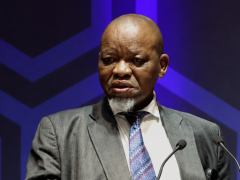
There may be an opportunity for Transnet to generate revenue by having a more transparent bidding system for berthing windows – Lance Pullan