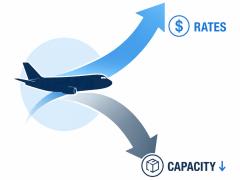
The implementation by Zimbabwe of a cotton-toclothing export strategy – aimed at boosting productivity and helping generate much-needed foreign currency for the country – can be expected to have minimal, if any, impact on the SA industry, according to Brian Brink, CEO of the Textile Federation. The scheme, launched at the 5th Clothing Indaba trade fair in Bulawayo by industry and commerce minister Mike Bimha, is aligned with the Common Market for Eastern and Southern Africa (Comesa) goal of a regional cotton-to-clothing strategy. Comesa believes that the development of the intraregional cotton-to-clothing value chain can contribute to socio-economic and sustainable environmental development in the region. The Zimbabwe version, according to Bimha, “sets out a roadmap” to help the country “regain its leadership in quality and value-addition” in the cotton-to-clothing sector. It was developed with the support of the International Trade Centre (ITC), and the strategy was funded by the European Union (EU) under the EU-Africa ‘Partnership on Cotton’, and the African, Caribbean and Pacific Group of States (ACP). This regional valueadded intervention in the cotton sector is expected to contribute heavily to the achievement of the millennium development goals (MDGs). Bimha believes that it could generate productive employment for all – including women and young people – and promote gender equality and empower women along the entire cotton-toclothing value chain. “An abundance of quality natural fibre cotton, as well as highly skilled manpower in Zimbabwe, are two of the main justifications behind this export ploy. Not only generating the muchneeded foreign currency, but repositioning Zimbabwe as a global competitor.” And Zimbabwe’s hopes for the scheme are certainly ambitious. The targets aimed at are a 71% increase in yields by some 250 000 smallholder farmers; an increase in annual seedcotton production to 450 000 tonnes; and for exports of textiles and garments to reach US$110 million by the completion of the strategy implementation. But, while this scheme sounds grand and glorious, it’s nothing new, according to Brink. “The principle of adding value all through the production chain – through cotton growing, ginning, spinning and textile, garment and apparel manufacture – is as old as the hills,” he told FTW. “It has been adopted by many countries. But some have been successful and some not.” And SA was one of the ‘nots’, he added. “We had all the links in the cotton chain, from growing to textile manufacturing,” he said. “But it all fell through because it needs whole-hearted government support.” Despite the potential benefits, Brink added, few African countries have managed to make a mark in the world market, and – despite being a net exporter of cotton – Africa remains a net importer of textiles and clothing. And, since the start of the global economic crisis in 2008, the buyer's market has been driving harder bargains, and has raised the pressure on suppliers from developing countries (DCs). With capacity in DCs twice as high as demand, a cutthroat battle for orders has begun in what has essentially become a buyer's market. But the DCs have watched the noose tightening, with the cotton industries in the likes of Macedonia, Bangladesh, Peru, Colombia, Egypt and Morocco reported to be shrinking annually at a double-digit rate and tottering on ‘break-even or less’. And the situation is no better is sub-Saharan Africa where the factory closures started even before the crisis. This is what the ITC, Comesa and now Zimbabwe aim to overcome with the regional cotton-to-clothing strategy. But, with such a battle on their hands, Brink felt that they were going to have limited muscle to spare to attack the SA market. INSERT & CAPTION The buyer's market has been driving harder bargains, and has raised the pressure on suppliers from developing countries. – Brian Brink CAPTION Zimbabwe is pinning its hopes on a new cotton-to clothing export strategy.
Zim cottons on to clothing export strategy
Comments | 0
© Now Media. This content is protected by copyright and may not be adapted or republished. If you would like to discuss cooperation opportunities, please contact: editor@freightnews.co.za.