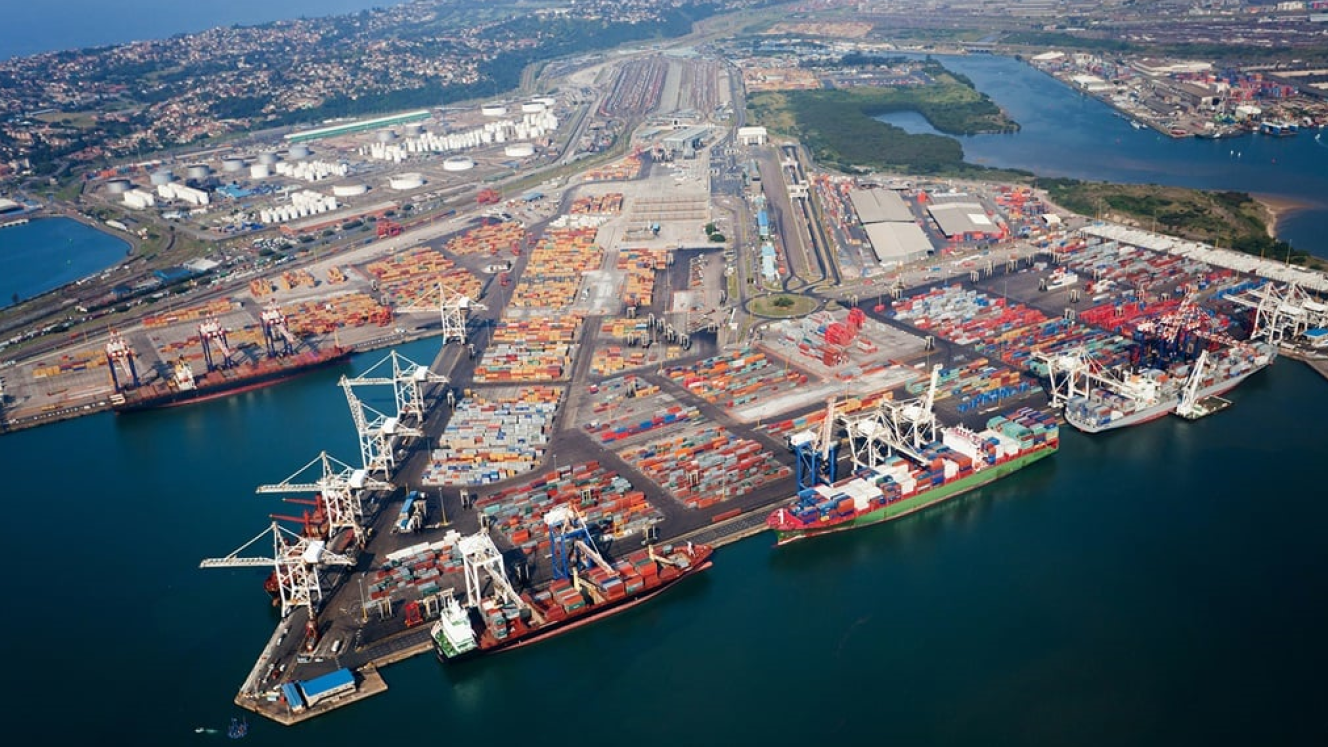
CLIVE EMDON THE INCREASE in plant and machinery being shipped to Zambia reveals the emergence of a manufacturing economy, says Adrian Friend, MD and owner of Celtic Freight. “There’s been a complete change in the past decade. In those days we only transported finished products to Zambia. Now we take up plant and machinery for Zambians to produce their own goods.” Celtic Freight is celebrating its 10th anniversary this month. Working mainly with the shipping lines and Zambian importers in industry it ships 140 road loads a month. Friend says his company adds value to the supply-chain by securing machinery and delivering it door-to-door. This includes machinery out of Durban such as tractors, horses and trucks. “Business will just grow and grow,” says Friend, an architect by training who grew up in Zambia and married Sonett, a South African. She runs the company’s operations out of their 40 000m2 Isando premises (13 000m2 under cover) with a staff of 65. Celtic also employs 80 truck drivers, all Zambians, who Friend describes as “good people to work with, industrious and well-educated and prepared to go for incentives.” Celtic Freight uses Johannesburg as its hub and has a large Durban transit warehouse for unpacking containers. It supports a Lusaka depot and a new depot in Livingstone. He attributes the success of the company to its focus on Zambia and to the company owning every item of its own infrastructure: its buildings and land, its bonded warehouses, its trucks and containers, and all other machinery.
Zambia’s manufacturing economy attracts new cargo mix
Comments | 0
© Now Media. This content is protected by copyright and may not be adapted or republished. If you would like to discuss cooperation opportunities, please contact: editor@freightnews.co.za.