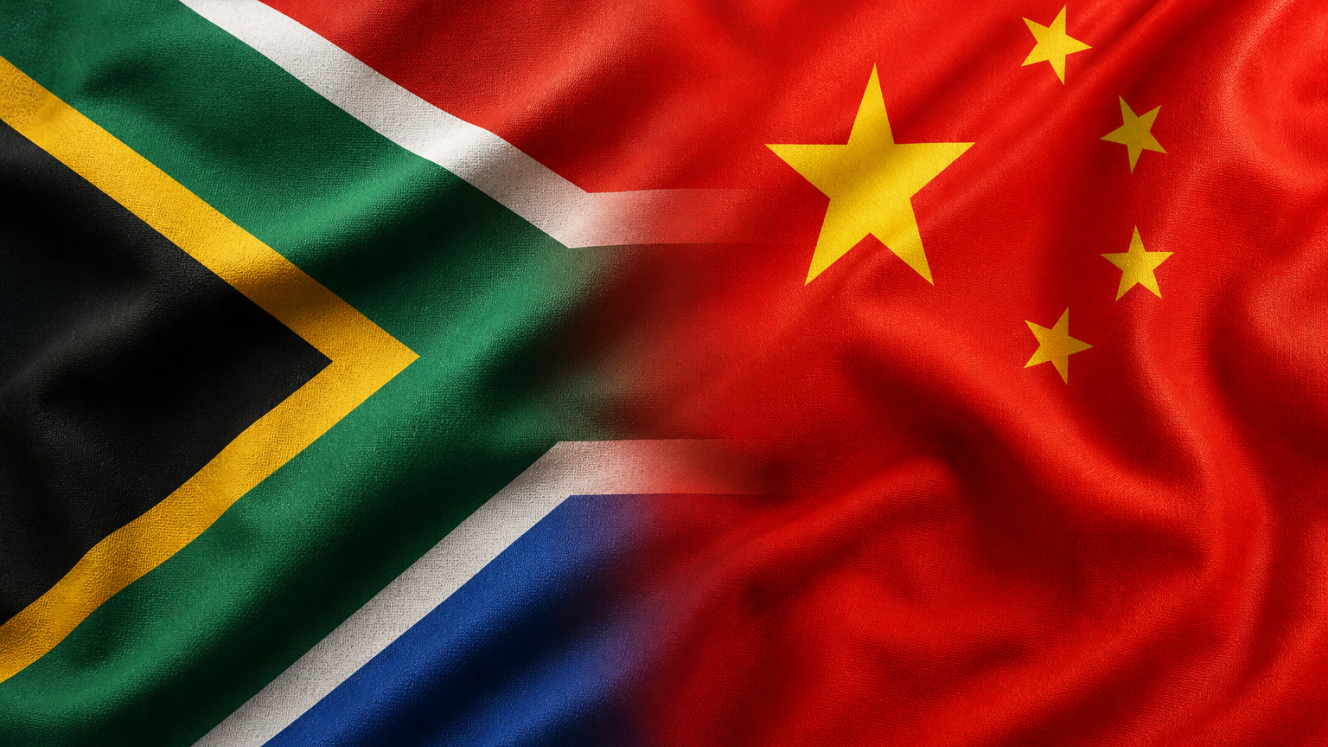
The South African government has hailed China’s decision to scrap tariffs on qualifying imports from 53 African countries as a landmark opportunity, but economists warn the move may offer more symbolic value than actual economic substance.
Framed under the Framework Agreement on Economic Partnership for Shared Prosperity (CAEPA), the decision removes duties on qualifying tariff lines, effective May 1. However, independent analysis suggests that structural bottlenecks and a lack of manufacturing depth will severely limit the “early harvest” government hopes to reap.
Qualifying South African goods exported to China would benefit from zero customs duties under the scheme, until April 30, 2028, subject to compliance with the applicable tariff schedule and rules of origin, the Department of Trade, Industry and Competition said in a statement on Friday.
“This preferential market access framework offers a strategic opportunity for South Africa to enhance export competitiveness, diversify into higher-value-added products and expand market access for agricultural, industrial and beneficiated goods,” Minister of Trade, Industry and Competition, Parks Tau, said.
The department is currently working with Sars to streamline the “certificate of origin” process required for exporters to claim the preference.
Gains for agriculture
According to Centre for Risk Analysis (CRA) economists, quoting a recent report on China’s zero-tariff policy for Africa, the move presents an immediate upside for South African agricultural exporters, particularly in sectors previously hampered by duties. Some of the agricultural benefits are as follows:
- Wine: Previously subject to a 14% tariff, South African wine can now compete more effectively with Australian and Chilean products.
- Nuts: The elimination of tariffs consolidates a relationship where China already takes 98% of South Africa’s pecan exports and 50% of its macadamias.
- Citrus and deciduous fruit: Established channels for grapes and plums are expected to see volume growth as landed costs decrease.
- Marine and niche products: Opportunities exist for rock lobster, squid and rooibos tea to expand into Chinese retail.
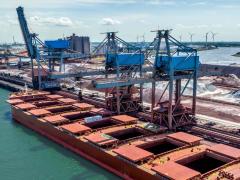
According to the CRA, total bilateral trade between South Africa and China was $53.58 billion, with a trade deficit for South Africa of $17bn in 2025. Primary commodities exported include iron ores, PGMs, manganese and coal.
Trading Economics notes that South Africa exported $13.56bn to China during 2025, based on figures from the UN’s COMTRADE database on international trade.
Limited benefits
Efficient Group chief economist Dawie Roodt has a cautious view, noting that while “free trade is always better than restricted trade”, the practical upside for the local economy and the rest of Africa is constrained by current industrial output.
“The problem is that the benefits to South Africa and sub-Saharan Africa, generally speaking, are actually quite limited because we do not manufacture that much and we certainly do not manufacture goods that we export to the Chinese,” Roodt says.
He says the Chinese remain the dominant force internationally in manufactured goods, making it unlikely that South Africa will suddenly pivot to exporting high-tech items.
“Don’t think we are all of a sudden going to start manufacturing TVs and export that to China, that is not going to happen.”
Strategic dependency
CRA economists echoed this sentiment, describing the policy as a “geopolitical signal” as much as a trade opening.
The CRA highlighted that South Africa’s export basket remained concentrated in raw minerals like iron ore and platinum group metals (PGMs), which already entered China at near-zero rates.
Its report identifies several structural constraints to attaining the economic benefits of the policy.
- Non-tariff barriers: Stringent sanitary and phytosanitary (SPS) standards remain a hurdle for the $1.8bn beef export opportunity.
- Logistical failures: Inefficient ports and electricity tariff inflation act as “binding constraints” that a simple tariff removal cannot fix.
- Competitive displacement: South Africa now faces intensified competition from 52 other African nations that received the same status simultaneously, eroding any relative advantage.
Potential for ‘spin-off’ benefits
Despite the practical constraints, Roodt suggests a secondary benefit could emerge if South Africa positions itself correctly: Chinese firms may use the zero-tariff status to establish manufacturing bases within South Africa to export back to China or other markets.
“I suspect that Chinese companies may make use of this opportunity to establish manufacturing hubs in Africa. We can actually create conditions in South Africa, like tax-free zones, to make it attractive for Chinese companies to establish factories,” he says.
According to the CRA, the policy should be treated as an “enabling condition, not a guarantee of demand”, as China’s import decisions are often governed by state-directed geopolitical logic rather than market signals – a lesson learned from Angola’s recent 47% drop in oil exports to Beijing.