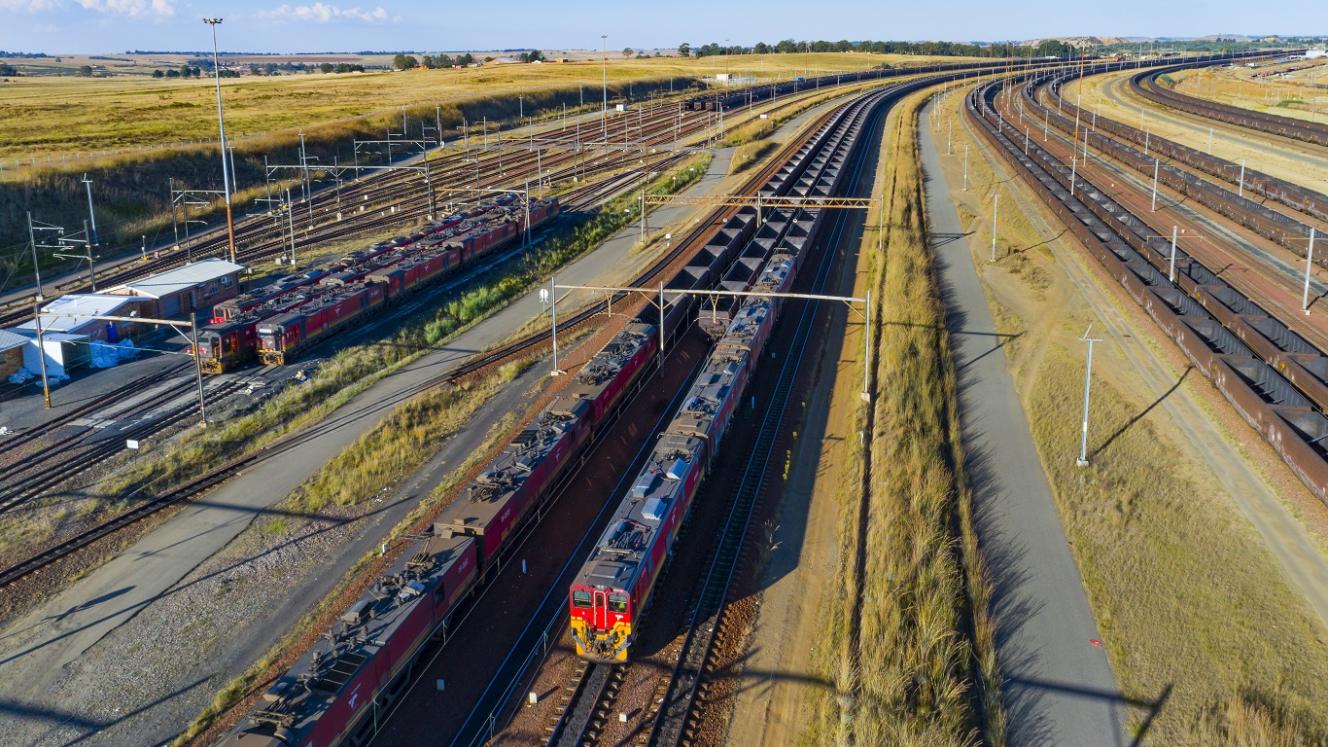
Zambia’s psyche has tangibly transformed over the past few years from “being the middle of nowhere” to “being the middle of everywhere”. Seeing Zambia as the central hub for southern African trade was a consistent theme through the interviews and meetings FTW had with industry leaders during its annual visit to the country. There have been references to the geographic centrality of Zambia during previous visits, but this was the first where it emerged as a consistent theme. This has far-reaching implications for the logistics sector and the economy of the country as a whole. Sentiment drives investment, and as reported in this feature, logistics companies are investing in Zambia in order to meet the needs of shippers and cargo owners. Freight is flowing because the economy is growing. Critically, the economy is diversifying and its reliance on copper is diminishing. There is a (still small) revival of manufacturing combined with major growth in agricultural output. Advertisers featured in this special report are investing at all points along the logistics value chain, with some entering the market for the first time. Others are expanding into neighbouring countries either through alliances or by opening their own subsidiaries. Many are working hard to ensure that their airfreight business takes off. Zambia is now served by British Airways, Emirates, KLM, South African Airways, Kenya Airways, Ethiopian Airlines and TAAG Angola Airlines. The number of dedicated freighters serving both Lusaka and Ndola continues to grow. Industry has the backing of government, which offers investors attractive incentives, and is working on reducing business red tape and border bottlenecks. Zambia is also a signatory to a number of trade agreements designed to facilitate intra-African trade. According to the 2013 Economic Development in Africa Report by the United Nations Conference on Trade and Development (Unctad), Zambia is a member of the Common Market for Eastern and Southern Africa (Comesa), the Southern African Development Community (SADC) and International Conference on the Great Lakes Region (ICGLR). Investors in Zambia are also seeing a good return. According to the 2013 World Investment Report, Zambia ranks 17th in the top 20 global economies with the highest inward foreign direct investment (FDI) rates of return in 2011 – on a par with Bolivia, the Czech Republic and Russian Federation; and ahead of Honduras and Chile. In 2012, Zambia attracted up to US$1066 billion in FDI. This is slightly below the US$1108 in 2011, but 53% ahead of the US$695 million of 2009 during the international financial melt-down. Much of this investment is from China, according to the report. But investors from Japan, South Africa, India, Canada and the United Kingdom are challenging this dominance. Zambia’s trade links also show an interesting pattern. According to Ernst & Young, Zambia’s major trading partners are China (21.4%), Saudi Arabia (8.9%), DRC (8.6%), South Korea (8.3%) and Egypt (8.1%). There are also major logistics investments driving growth: The World Investment Report singles out the Angola-Zambia Refined Petroleum Multi-Product Project, which involves Ba Liseli Resources (Zambia) constructing a 1400-km pipeline and related infrastructure from a refinery in Lobito, Angola, to Lusaka, Zambia. The overall project represents an investment of US$2.5 billion within the framework of a publicprivate partnership. Of this, US$168 million was announced in 2012 as Zambia’s first greenfield project in Angola since 2003. But the key to unlocking intra-African trade and reducing the overall cost of doing business on the continent lies in rail – and here the consensus (even among trucking companies) is that the region’s authorities have failed to build up the necessary head of steam to drive the revival of rail. There are plans and policies, but road is likely to be the main artery connecting the Zambian hub to the rest of the region for the next five to 10 years at least. INSERT The key to unlocking intra- African trade lies in rail — and the region’s authorities have failed to drive its revival.
Zambia dethroning South Africa?
Comments | 0
© Now Media. This content is protected by copyright and may not be adapted or republished. If you would like to discuss cooperation opportunities, please contact: editor@freightnews.co.za.