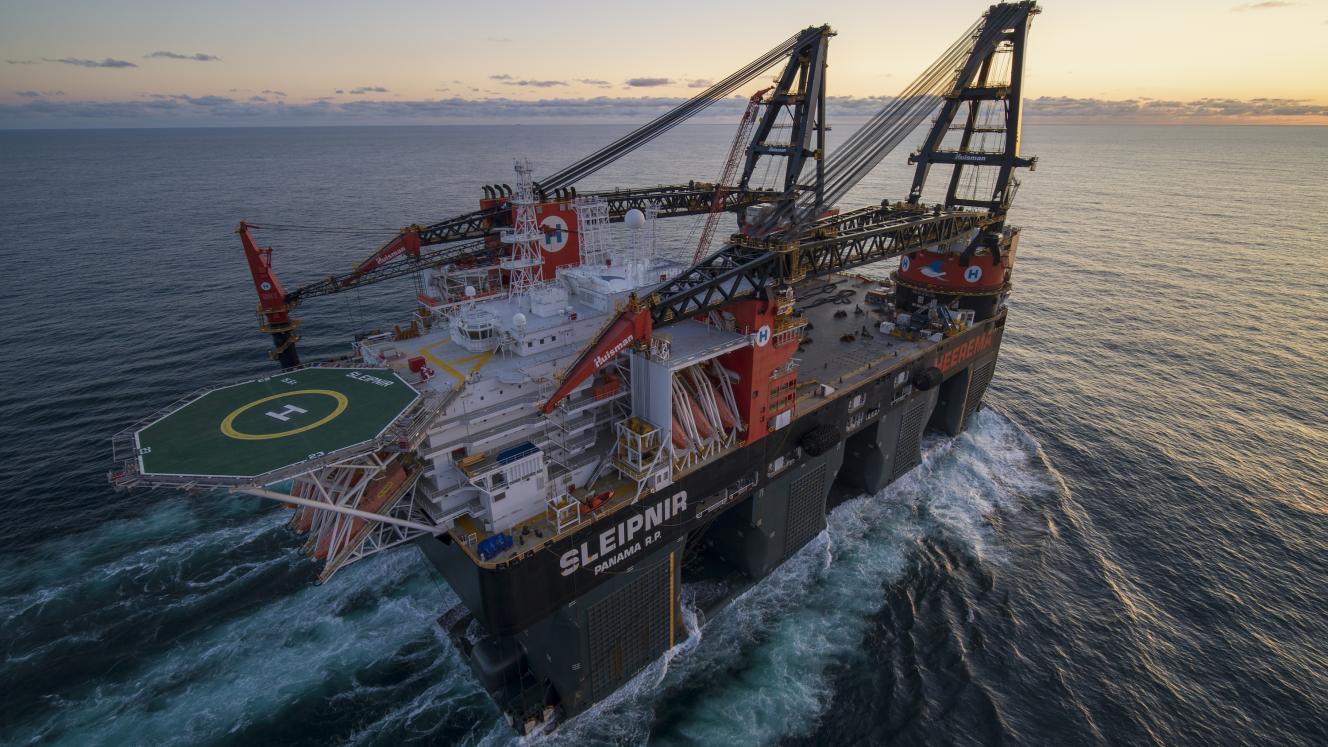
Heerema Marine Contractors managed to cut the North Atlantic transit time of its semi-submersible crane vessel Sleipnir by 2.5 days during a voyage optimisation pilot with French ocean intelligence company Amphitrite.
The pilot reduced the sailing distance by 240 nautical miles and cut CO₂ emissions by up to 18%, while enabling the vessel to maintain higher average speeds without increasing fuel consumption, according to a joint statement issued by the companies.
The voyage optimisation system used five years of operational data supplied by Heerema to model Sleipnir’s speed and power consumption under changing weather, wave and ocean current conditions.
The vessel was sailing from Rotterdam to New York to install an offshore wind substation when the system was tested under North Atlantic winter conditions, the companies said.
Shortly after departure, the system identified a sailing window that allowed Sleipnir to benefit from tidal currents in the English Channel.
As the voyage progressed, it recommended a more northerly route around a developing storm, allowing the vessel to take advantage of favourable tailwinds while remaining close to the great-circle route, according to the statement.
Longer route cuts transit time
On the return crossing, the system directed Sleipnir towards the Gulf Stream rather than along the shortest route.
Although the vessel travelled a greater distance, favourable currents increased its speed over ground to 14.6 knots and reduced the overall transit time, the companies said.
The pilot had also provided further information about the vessel’s performance during transit, Heerema decarbonisation engineer Alejandro Velez Isaza said.
“Working with Amphitrite not only demonstrated the value of vessel-specific voyage optimisation but also gave us a better understanding of how Sleipnir behaves during transit,” Isaza said.
Heerema is continuing to use Amphitrite’s ocean intelligence system to support voyage planning and offshore project preparation across its fleet, according to the statement.