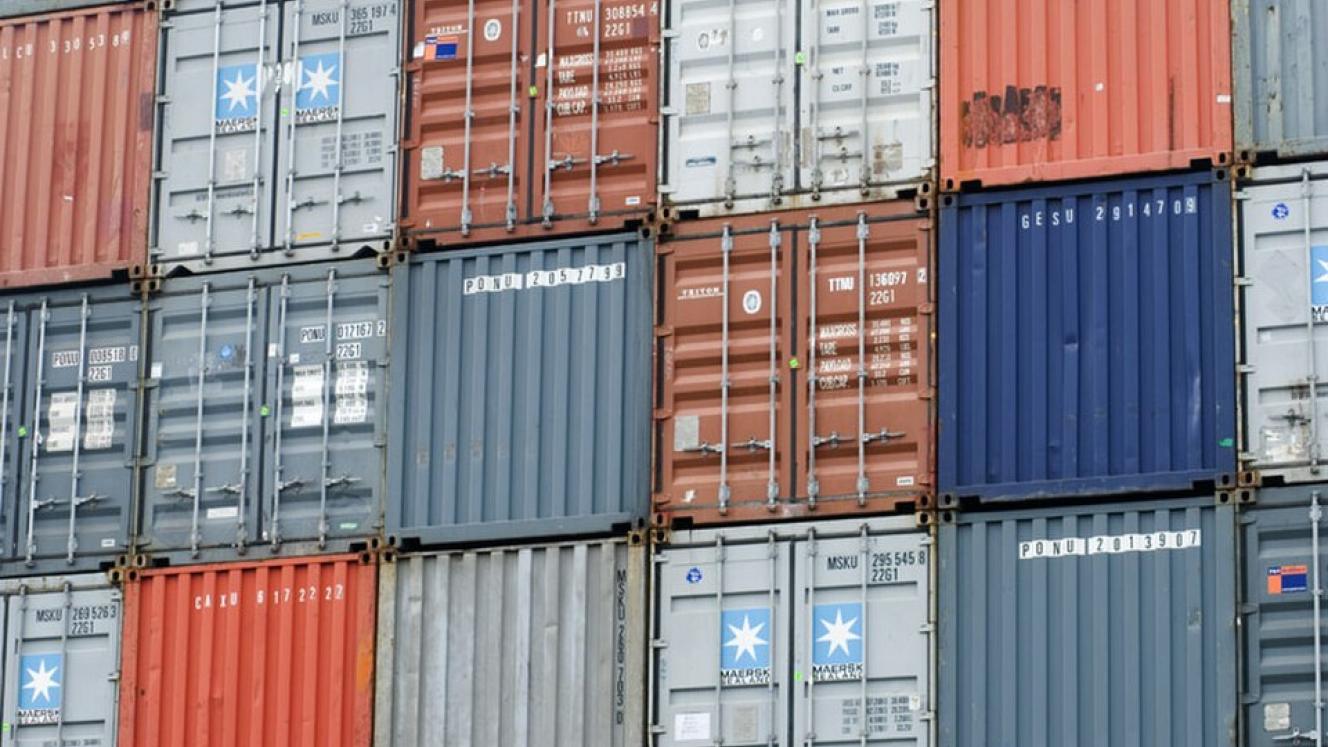
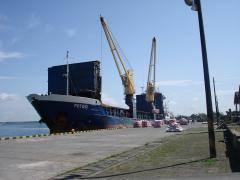
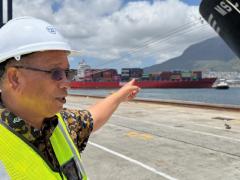
The port of Walvis Bay is outperforming its design specifications – and Namport is focusing on improving productivity to ensure that it retains its position as the western gateway into the SADC region. “We expect to handle 350 000 TEUs this year. That is a 6% growth on the 331 000 in 2012,” says Namport executive: marketing and strategic business development Christian Faure. According to Namport, the original design capacity of the port is 250 000 containers a year – and this was successfully increased to 355 000 in 2011 by means of a terminal optimisation programme. “There is a lot of focus on productivity as the shipping companies have told us that any increase in tariffs must be accompanied by productivity gains,” he says. Two new 140-ton mobile ship-to-shore cranes have been commissioned, bringing the total fleet to eight – three with 104 ton capacity, and the remaining five the full 140 tons. They have a reach of 35 metres. With the new gantries the port will consistently have three cranes per vessel – allowing for one to be out of commission for servicing and repairs at any one time. Walvis Bay’s vessel repair capacity has also been increased through the addition of a third floating dock which will arrive shortly. “At present our floating docks are fully booked,” he says. Additional land alongside the port has also been acquired to provide common user access for ship repair. Namport is working in partnership with the shipping companies in order to optimise the use of the port. Berthing windows are provided for scheduled services. Work is also progressing on a new vehicle terminal with 820 bays. The port is handling around 1 200 vehicles a month, according to Faure. These upgrades are geared to keep freight moving until a new container quay and handling facility is built. Seven companies or consortia have tendered for the build operate and transfer project, and the adjudication process is currently under way. CAPTION Christian Faure ... working in partnership with the shipping companies.
Walvis Bay focuses on productivity to retain gateway status
Comments | 0
© Now Media. This content is protected by copyright and may not be adapted or republished. If you would like to discuss cooperation opportunities, please contact: editor@freightnews.co.za.