South Africa’s private sector will be allowed to import and distribute foot-and-mouth disease (FMD) vaccines following a legal settlement that ends the exclusive arrangements previously governing vaccine procurement and distribution.
The settlement was finalised between the Department of Agriculture and three agricultural organisations – Sakeliga, the Southern African Agri Initiative (SAAI) and Free State Agriculture.
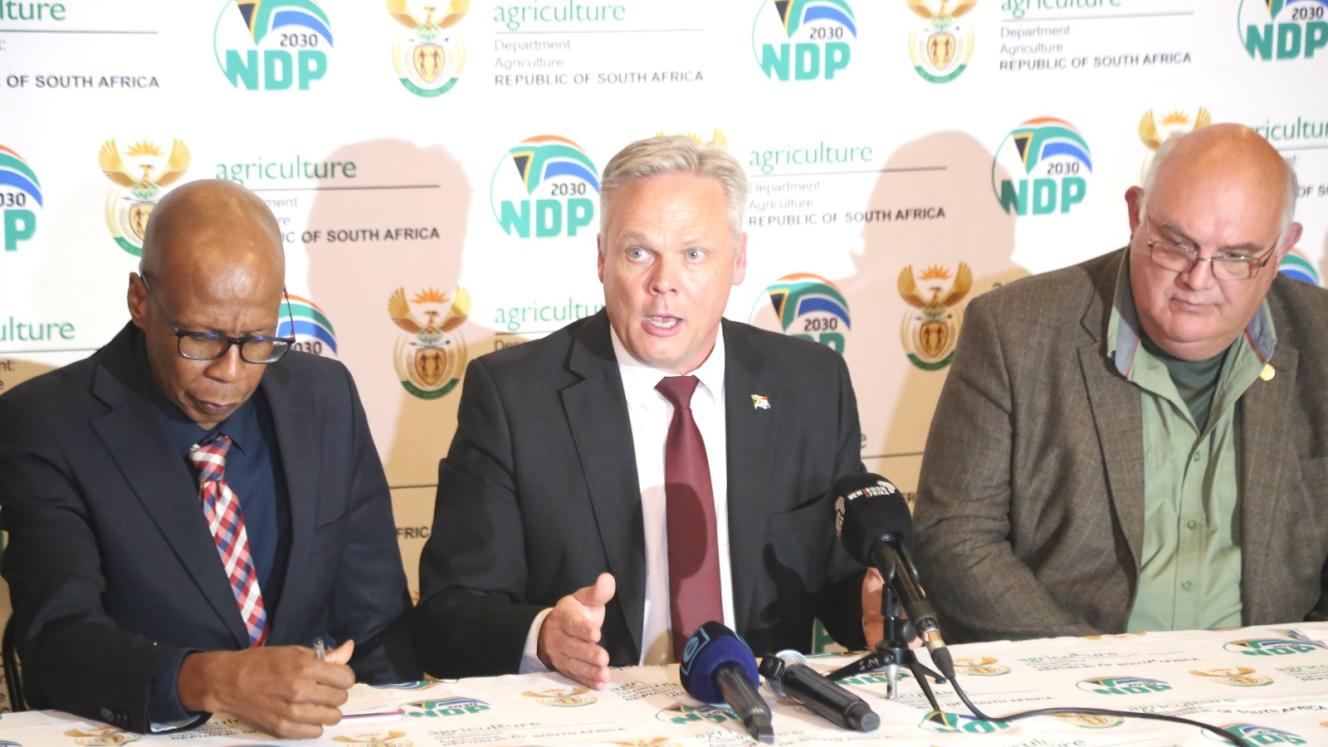
Newly appointed Agriculture Minister Willie Aucamp said the agreement would allow livestock owners and managers to voluntarily vaccinate cloven-hoofed animals, subject to prescribed biosecurity measures, reporting requirements and veterinary traceability protocols.
The Department of Agriculture and Onderstepoort Biological Products (OBP) have also relinquished their exclusive rights to import and distribute FMD vaccines, opening the way for private companies to procure vaccines from international manufacturers.
“We now need to enable the private sector to import at scale, and it is for this reason that the Department and Onderstepoort Biological Products have expressly relinquished sole rights to the import and/or distribution of FMD vaccines,” Aucamp said.
He added that government would continue working with industry and private-sector stakeholders to control the ongoing FMD outbreak.
“This settlement is indicative of government's willingness to work with the private sector as government cannot do this alone,” Aucamp said.
Private supply channel
The agreement had created a second channel through which farmers could obtain FMD vaccines while the government vaccination programme remained in place, SAAI chairperson Dr Theo de Jager said.
“In the private-sector channel, we will pay for our vaccines, and we know what the prices are because the two largest suppliers publish their prices,” De Jager said.
He added that farmers who could not afford or did not want to purchase vaccines privately would continue to rely on the government vaccination programme.
However, farmers requiring urgent access to vaccines would now be able to obtain supplies through private-sector channels.
“The next step will be for companies to make the investment and bring in the vaccines. We have the facilities, cold storage and logistics capacity to take them from manufacturers abroad and bring them into the country,” De Jager said.
The settlement removed restrictions preventing commercial operators from importing and distributing vaccines, Sakeliga CEO Piet le Roux said.
“From the moment we sign this agreement, there are no obstructions or exclusive arrangements preventing the import and distribution of vaccines, so it is now up to commercial partners in the market to provide solutions.”
Trade disruptions
Recurring FMD outbreaks have disrupted South Africa’s livestock and agricultural exports and resulted in restrictions being imposed by several international trading partners.
Following outbreaks that escalated in 2021 and 2022, countries including China suspended imports of South African cloven-hoofed animals and certain animal products, disrupting established export markets.
The disease and measures introduced to control its spread have also affected domestic and regional livestock supply chains through movement restrictions, veterinary certification requirements and additional biosecurity measures.
Earlier this year, the dairy industry warned that inconsistent provincial enforcement of animal movement regulations and delays surrounding veterinary certification were disrupting dairy exports and increasing transport and facility-separation costs for producers.