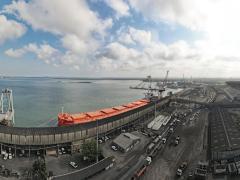
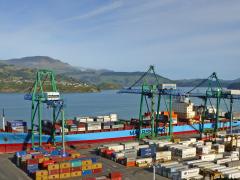
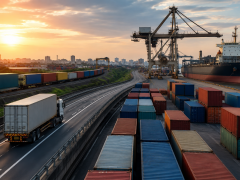
Ongoing congestion and operational challenges at the port of Cape Town have seen an increase in the number of vessels bypassing the port, forcing Western Cape exporters to find alternative solutions to getting their products to market. Terry Gale, chairman of the Exporters' Club Western Cape, told FTW that while the operational issues in Durban – caused by the infrastructural damage after the massive storm in October – seemed to be easing, the knock-on effect was still felt in Cape Town. “Operational issues in Durban mean the vessels take longer to upload or offload cargo and therefore stopping at the port in Cape Town means further delays. Rather than run the risk of missing their stringent berthing windows at the European or United States (US) ports, they simply bypass Cape Town,” he explained. This means exporters need to find other sailings to accommodate their exported cargo. Getting their product out to the global market via alternative sailings can be rolled over up to three times, said Gale. He pointed to a recent consignment for an exporter who had booked a vessel sailing to Europe for 650 containers. “The vessel booked had to bypass Cape Town and we were able to find a sailing a week later for 300 containers but it was quite a juggling act to get the other 350 out,” Gale said. Furthermore, the strong summer winds in Cape Town also continue to impact on operations, with Gale highlighting that in December alone over 400 hours were lost due to high wind conditions and the fact that the port was closed on Christmas day and New Year’s day. ZacPak MD Willie Nel pointed out that these challenges could only be mitigated by increased infrastructure. “Possibly extended collecting and delivery timeframes during the peaks to cope with the minimised operations and infrastructure challenges,” he suggested. “I have to say however that when the high winds are not a factor, the port operates really well. And we are lucky to have such a strong relationship with Transnet who are always available and willing to engage with industry to find solutions,” said Gale, noting that the ports authority had opened up stacks over the December period to get the products stored at the port so that it would be quicker to upload the cargo onto a vessel. “Transnet also assured us at a recent Exporters' Club meeting that they were looking at ways to address the operational problems caused by high winds, including adapting the rubber tyre gantry (RTG) cranes to be able to withstand higher wind speeds,” he said. Gale said the port of Cape Town was currently operating almost to capacity with more growth expected this year.
Vessels continue to bypass CT port as congestion issues escalate
Comments | 0
© Now Media. This content is protected by copyright and may not be adapted or republished. If you would like to discuss cooperation opportunities, please contact: editor@freightnews.co.za.