Ed Richardson
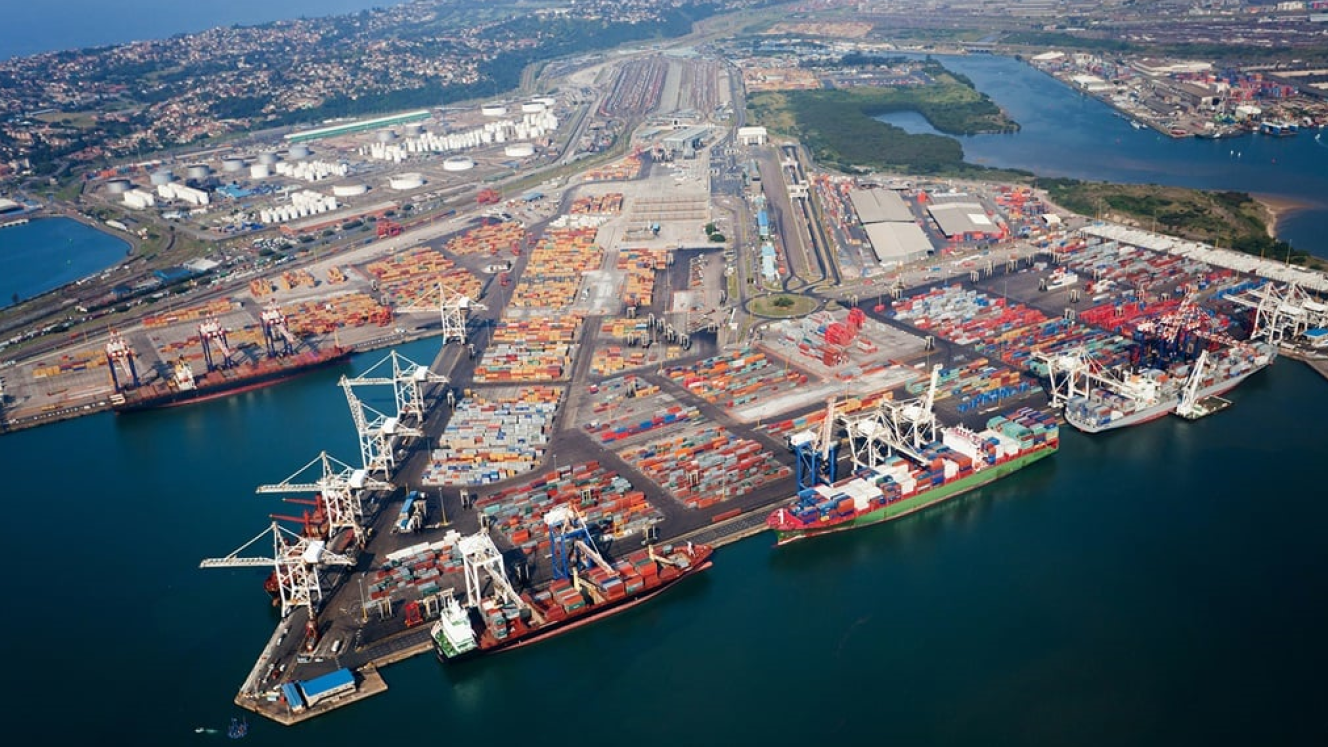
TRAINS, PLANES and trucks are still at the heart of the global economy, despite the emergence of the new economy where wealth is created by harnessing knowledge to an open trading system, according to the United Nations Conference on Trade and Development (Unctad).
Yilmaz AkyŸz, acting director, Division on Globalisation and Development Strategies, says a quick glance at a table of the world's most traded goods in the newly-published UNCTAD Handbook of Statistics 2000 shows that there is more to economic development than computer chips and dot.com companies.
Information technology is indeed a large and rapidly growing part of the trading system, but traditional activities revolving around transportation remain dominant.
It is hardly surprising that oil price hikes can still provoke uncertainty and disruption in an interdependent world, he says.
Despite the hype around the information age and the emphasis on services, the share of services in the value of total world trade has not changed much over the past decade, according to the handbook.
It has risen by less than one percentage point, from 18,4% in 1990 to 19,2% in 1998. And the corresponding data for developing countries actually shows a slight decline, from 16,8% to 16,5%.
The Handbook points to the continuing shift of wealth from the developing to the industrialised world. Most developing countries are still heavily dependent on one, two or three items.
Clearly, the new economy has not yet migrated south, says AkyŸz.
The South is getting poorer.
Notwithstanding the low prices of oil prevailing in the past decade, the terms of trade of the least developed countries (LDCs) have steadily deteriorated, and in 1998 were some 19 percentage points below the 1990 level.
In Africa a large part of the problem is the lack of regional trading blocs.
Regionalism has been a rising trend for some time, particularly among developed countries; the share of intra-trade in total exports is already very high among APEC and EU countries, and the 1990s saw a strong growth in North America.
But the past decade also witnessed the emergence of subregional blocs in Latin America and Asia. So far only Africa has bucked this trend, he says.
Copyright Now Media (Pty) Ltd
No article may be reproduced without the written permission of the editor
To respond to this article send your email to joyo@nowmedia.co.za