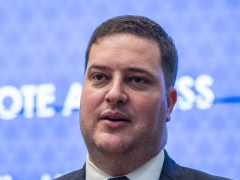
Transnet is anything but happy
about the Port Regulator’s
‘record of decision’ on its
tariff application for the
2016/2017 financial year, and
could cut back on its ports
development programme as a
result, according to Transnet
spokesman Mboniso Sigonyela.
The revenue allowed for
2016/17 is lower than the
previous year, said Sigonyela,
yet TNPA is expected to
continue with modernising and
expanding port capacity.
“As a result of the decision,”
said Sigonyela, “TNPA is
currently reviewing the impact
of the decision and the funding
plan on its capital expenditure
and strategic initiatives.
“We believe that the
decision to grant TNPA a 0%
adjustment was neither fair nor
reasonable, given Transnet’s
obligations in relation to
operation of the ports and
other government initiatives
such as Operation Phakisa.”
But Mahesh Fakir, CEO
of the SA Ports Regulator,
told FTW that this Transnet
argument was not valid.
“We have allowed all of
the costs and capex they have
applied for,” he said. “We
have also allowed for a 6.6%
inflation adjustment in line
with the national treasury
forecast methodology.
“And, on top of that, we have
allowed for over R2 billion in
profit for TNPA. I can’t see
what they have to complain
about.”
The Ports Regulator last
week announced that it had
cut the increase in the Transnet
National Ports Authority
(TNPA) cargo dues for 2016/17
to 0%, while still tolerating
a TNPA profit in excess of
R2 billion after only a slight
(-0.3%) decrease in allowed
revenue.
“This is the second
tariff assessment since the
introduction of the multiyear
tariff methodology in
2014,” said Thaba Mufamadi,
chairman of the Ports
Regulator, “and progression
continues to soar towards
increased levels of transparency
and consistency in port tariffs.”
While the TNPA applied for
an average 5.9% tariff increase,
the regulator “after considering
all the relevant information
at its disposal” decided on an
average tariff increase of 0%
for the tariff year 2016/17.
So all cargo dues shall
increase by 0% – except marine
services and related tariffs,
which are to increase by 3%.
Because of the underlying
threat to the SA manufacturing
sector, the regulator decided
that full container load (FCL)
exports would decrease by 10%.
In addition, automotive volume
discounts have been equalised
for all users at the maximum
60% level discount. This,
according to the regulator,
would “substantially level the
playing field in the automotive
sector whilst significantly
reducing the cost of doing
business in the sector”.
The drought and its expected
impact on food price inflation
were also taken into account.
Especially under consideration
was maize – a key staple in SA.
“Therefore,” the regulator’s
statement said, “as part of
the holistic approach to limit
the impact of the drought on
the people of SA, maize will
receive a 50% discount on
cargo dues, capped at 5 million
tonnes, for the 2016/17 tariff
year.”
In conducting its
assessment, Fakir told FTW
the regulator had taken a
view on a number of cargo
volume and market-related
factors. These included the
inflation outlook and the
cost of debt, the operational
requirements of the TNPA,
as well as relative port pricing
benchmarking. Therefore
the regulator was confident
that its Record of Decision
reflected a balanced and
sustainable average tariff
change.
The regulator was
also confident that the
indicative overall average
tariff adjustment for the
2017/18 and 2018/19 tariff
years would be within the
inf lation target band.
And, said Fakir, the expected
subdued economic activity over
the three-year tariff period was
also taken into account.
Transnet reviews invest following Port Regulator's decision
Comments | 0
© Now Media. This content is protected by copyright and may not be adapted or republished. If you would like to discuss cooperation opportunities, please contact: editor@freightnews.co.za.