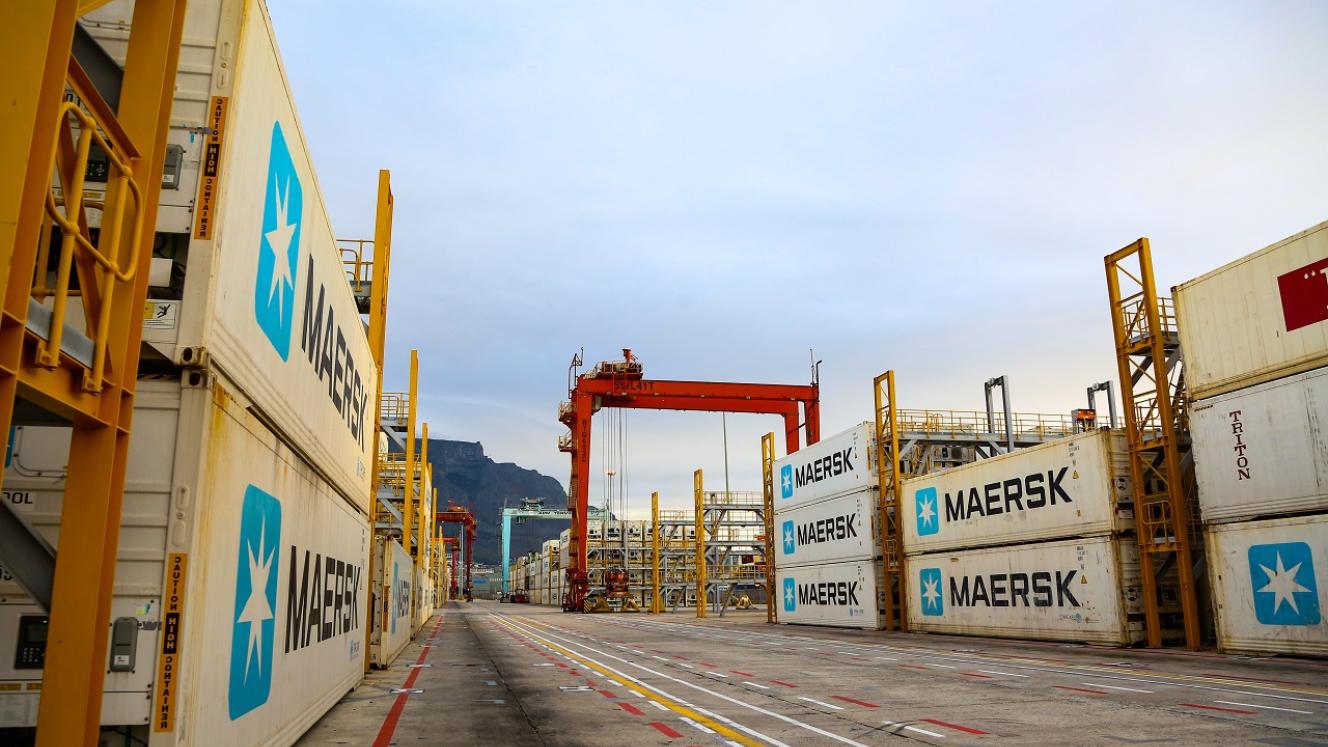
Transnet plans to take its container corridor to market for concession before the end of the year as it accelerates private-sector participation to unlock investment and improve the performance of South Africa’s freight logistics network.
Speaking at the SAPICS Conference in Cape Town, Transnet group chief executive Michelle Phillips said the manganese export corridor would also go to market within the next few weeks, while the request for proposals (RFP) process for a rolling-stock leasing company was already under way.
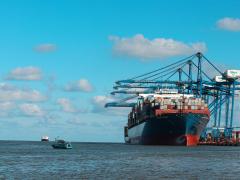
Last week, the state-owned logistics entity issued an RFP for a 25-year concession to develop, finance, operate and maintain the multipurpose terminal at the Port of Cape Town. In January, a 25-year joint venture with International Container Terminal Services (ICTSI) to operate and upgrade Durban Container Terminal Pier 2 officially took effect.
Phillips stressed that the private-sector partnerships being pursued by Transnet did not amount to privatisation.
“We’re not giving anything away and we’re not selling anything,” she said. “In all instances, we will partner for value.”
She said the introduction of private-sector participation was part of Transnet’s strategy to reinvent itself for growth. Following the implementation of its recovery plan about 18 months ago, the organisation has undergone significant change.
“When we implemented the recovery plan, we had to fix and optimise. We have spent 18 months doing this, but we are still in recovery. There is just so much to do, and we will continue to push recovery,” she told delegates during her keynote address.
“We cannot, however, focus only on recovery. We have to look ahead, transform our business, implement reforms and grow. We are leveraging private capital and bringing in the necessary expertise as we reinvent our business and modernise and upgrade our networks and infrastructure.”
Phillips said Transnet would invest R129 billion over the next five years, with most of the funding directed towards replacing and repairing ageing infrastructure rather than expanding the network.
“We are looking at around R25bn per annum. At least R115.9bn is geared towards sustaining capital initiatives, while R13.1bn will be directed towards expansionary initiatives.”
Phillips was particularly outspoken about inflated pricing and the assumption that suppliers could charge Transnet more, simply because it was a state-owned entity.
“Transnet cannot afford to pay anything other than what the market pays. If a private company is paying R150, I will not pay more than R150,” she said. “It cannot be that, because we are government, people think there is this big black hole of money and that they can charge whatever they want.”
She said Transnet had encountered mark-ups of 30% and 50%, and in extreme cases prices as much as 1 000% or 3 000% above market rates.
Ultimately, she said, these inflated costs moved through the supply chain and were borne by ordinary South Africans.
“If I overpay, I am going to pass those costs on to whoever brings goods into the country. Those costs are ultimately passed on to the consumer. We all pay, and we have to stop it.”
Phillips said Transnet had recently restricted seven companies linked to procurement irregularities and dismissed several employees. She warned that further action would follow against employees and suppliers found to be colluding or manipulating prices.