The South African government is on the right track to look east to build investment ties.
That was the message from trend analyst Guy Lundy who told delegates attending the recent Manufacturing Indaba in Johannesburg that China’s “one belt one road policy” where the importation and exportation of commodities and consumables were concentrated along one trade route, not unlike the Old Silk Road, was beginning to have a real impact on global commerce.
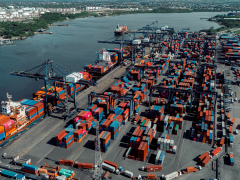
“The Indian Ocean belt is becoming a real hot spot in terms of investment coming into the eastern parts of Africa,” he said. This is mainly due to “products in China becoming too expensive to make, forcing that country to shift manufacturing offshore to cheaper destinations like Ethiopia, Mozambique, and Madagascar”.
It also underpinned the value of identifying prospective long-term partnerships, said Lundy, such as the signing of a peace treaty between Eritrea and Ethiopia, the latter being one of Africa’s fastest rising economies. When Ethiopia became landlocked after Eritrea gained independence in 1993, it relied on retrogressive tactics to sustain its sea trade, waging war against its neighbour and diverting business traffic to Djibouti.
But the UN-backed peace treaty it has finally accepted is proof of Ethiopia’s vision to re-establish access to the well-placed Red Sea port of Massawa on the Eritrean coast. Such strategies, explained Lundy, proved that “the continuum of growth circling around Africa is not a one-off event but appears to be self-sustaining”.
“Moreover, it should serve as encouragement to South Africa to break away from short-term, knee-jerk reactions to political volatility, ensuring rather that we build our infrastructure for long-term beneficiation from Chinese-backed manufacturing investment across Africa.”
From another perspective, particularly given the ongoing build-up of tariff tension between the US and China, independent analyst Ryk de Klerk said that South Africa should see how it could leverage off America’s push for isolationism. “Closer economic ties between the Brics countries will see South Africa experiencing double-digit growth in trade with Russia and China while Brazil may prove to be a winner for us as well.”
He said that the recent signing of the African Continental Free Trade Agreement in Nouakchott, Mauritania, also “opens enormous opportunities for South Africa”. With the relaxation of trade regulations across Africa, the UK heading towards EU import uncertainty as Brexit nears, and China-US cracks fissuring wider in its ongoing tariff standoff, South Africa should consolidate its future trade position. “Protectionism will undoubtedly lead to a change in global trade,” De Klerk said.
Of course the US dollar’s bullishness, its effect on the price of bullion as well as equity markets, and strained oil supply sustaining a high price of around $72 (R963) per barrel of Brent crude by Friday, are all factors impacting on emerging markets. But global trade favouring the east was not a trend that was going to change anytime soon, Lundy said.
“Businesses need to adjust to trade changes as traditional markets will dry up while others will open up,” De Klerk added.
INSERT
Indian Ocean belt is becoming a real hot spot in terms of investment coming into the eastern parts of Africa. – Guy Lundy