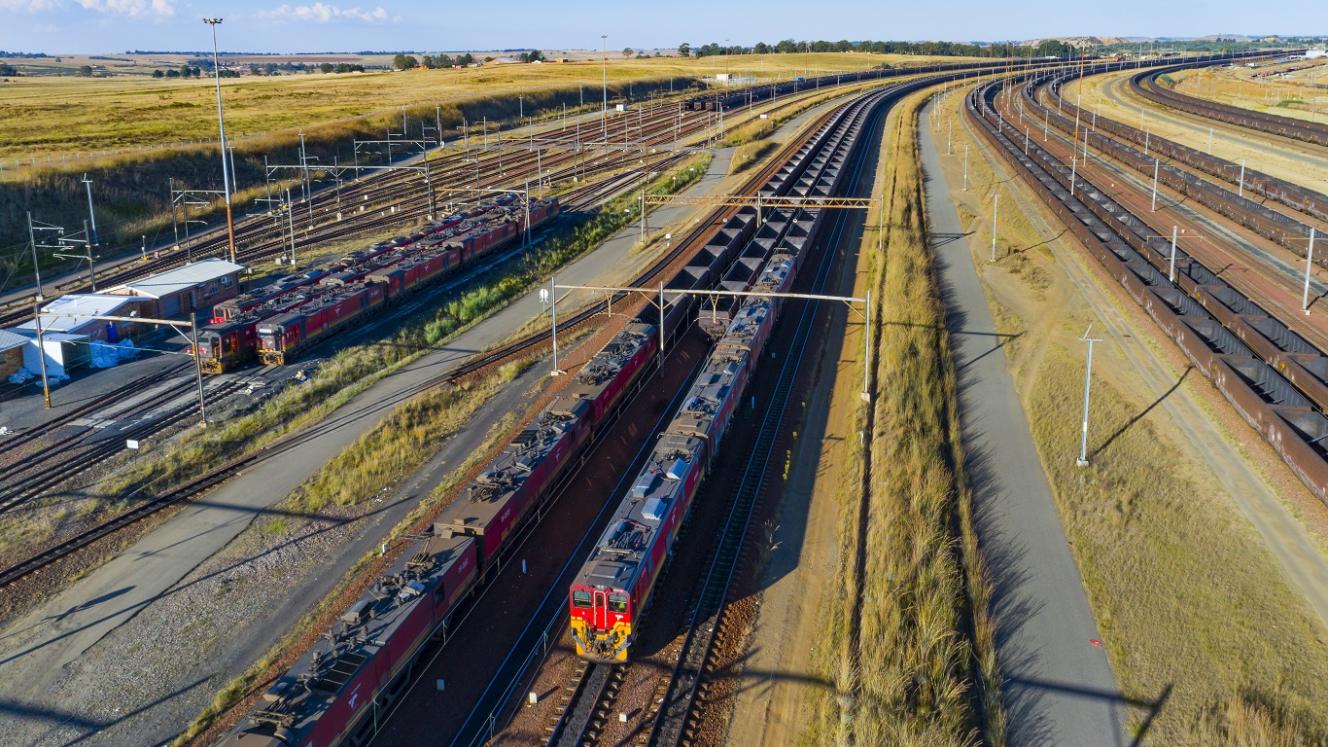
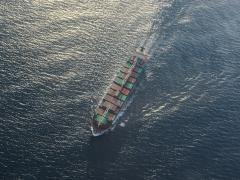
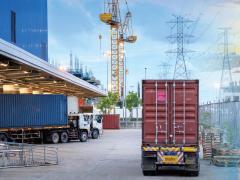
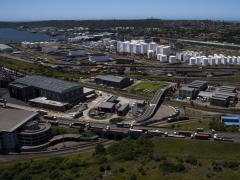
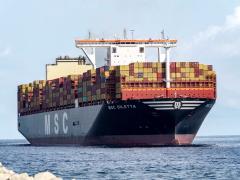
Is the Far East trade still a one-way wonder, with a serious import/export imbalance on the westeast leg? It’s arguably getting more balanced, according to Iain McIntosh, regional sales manager of MOL. “While the trade is traditionally westbound-dominant,” he told FTW, “there are clear signs that eastbound is closing the gap. This is not in TEU terms. But it is getting closer due to eastbound cargo being a lot heavier than westbound - nearly double the weight per slot eastbound in some cases. So we see growing balanced trade in 2014-2015.” However, Matt Conroy, trade and marketing manager of Maersk Line, didn’t take the same stance. “Certainly, the export market has grown faster than the import market,” he said. Thus the gap has closed slightly. But he felt there was still a “significant” imbalance. The fortunes on the trade have been relatively limited this year. From Conroy’s records, the first quarter import demand was strong, with double-digit growth. “But since then,” he added. “the market has been relatively flat.” There are many factors playing into this, according to Conroy. “But the rate of exchange and lower consumer consumption/confidence play a large part.” Maersk anticipates import growth for 2014, but at what Conroy described as “a moderate level, low single digits”. The line also anticipates that export growth will be slightly above import growth in 2014. Lance Pullan, GM, CSAV Group Agencies SA, looked at the trade from an export perspective from SA to the Far East. “The volume there has been relatively consistent,” he told FTW, “despite volatility in commodity prices. The expectation is that this trend will continue into 2014 – with volumes increasing as the Far East begins to recover from the global recession.” McIntosh described the trade as having been stable on imports, but only just, with moderate growth. This he deduced from the sea trade growth being below national growth by an approximate 1%-2% over 2012. “Export volume, however, has grown very well this year,” he said, “at approximately 10%.” He did, though, note that these were national trade figures – not just purely MOL growth. “They will vary, I suspect,” he said. The “cascade” principle, where vessels have been redeployed down into the north-south trades as the eastwest trades have been flooded with mega-container ships has led once again to capacity challenges on the SA-Far East run. But, according to Pullan, the freight rates have remained stable despite the increase in capacity as most lines cascade bigger vessels down onto this trade. “However,” he said, “the challenge is to optimally use this additional capacity given the port restrictions being faced in SA.” This where the relatively low draught at most of SA’s major container ports doesn’t yet allow these larger capacity vessels to sail fully laden. However, the main SA port of Durban (which handles 80% of SA’s container sea trade) is busy deepening its container berths to a 16.5m draught – ample for even mega-ships. McIntosh described the freight levels as “flat”. “But,” he said, “in spite of this, rate levels have remained stable, as supply/ demand has remained more or less the same.” He did, however, add that a general rates restoration (GRR) “would have been helpful”. When asked if there were any markets of particular growth, or new trends, Pullan pointed out that there had been a bit of a switch away from the main East Asian market in China. “There has been greater interest in shipping to smaller Asian countries rather than China,” he said. But, he added, the volumes here are still very small. Conroy, meantime, pointed out that the commodity export market still remained strong. Given the market conditions described by the FTW contacts, we asked if there had been any new developments within their companies related to this trade. Pullan focused primarily on the fact that, in August, CSAV – along with its partner lines – upgraded all vessels on its Far East service from 6 500-TEU to 8 500-TEU capacity ships. Conroy, however, told FTW that Maersk’s focus on schedule reliability continued to be a significant driver on the Far East trade. When asked if MOL had introduced larger tonnage vessels on this trade. McIntosh said that there was a moderate upsize in the line’s ASA service tonnage. “But,” he added, “this was more to do with balancing its ship system.” Looking ahead, McIntosh stressed that there might be some tighter space westbound from Asia in the first and second quarters of 2014. This, he added, would be mainly as a result of massive capacity reduction on the Asia–East Coast South America (ECSA) trade – while noting that a number of services are trunk lines. “The crunch could be tighter,” McIntosh told FTW, “as Asia–ECSA westbound is starting to show some increasing growth after a flat last two years. This whilst the eastbound trade from ECSA to Asia has been growing at 14% per annum consistently for the last three years.” And it will be noticed in this country. “This can have strong impact on way-port capacity in SA,” said McIntosh. INSERT & CAPTION 1 The eastbound trade from ECSA to Asia has been growing at 14% per annum consistently for the last three years. – Iain McIntosh INSERT & CAPTION 2 The challenge is to optimally use this additional capacity — as bigger vessels are cascaded down — given SA’s port restrictions. – Lance Pullan INSERT & CAPTION 3 Maersk anticipates import growth for 2014, but at a moderate level, low single digits. – Matt Conroy CAPTION Smooth sailing ... a fine balancing act on the westbound-dominant trade.
Trade imbalance closes marginally
Comments | 0
© Now Media. This content is protected by copyright and may not be adapted or republished. If you would like to discuss cooperation opportunities, please contact: editor@freightnews.co.za.