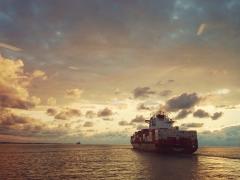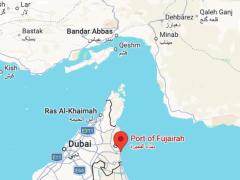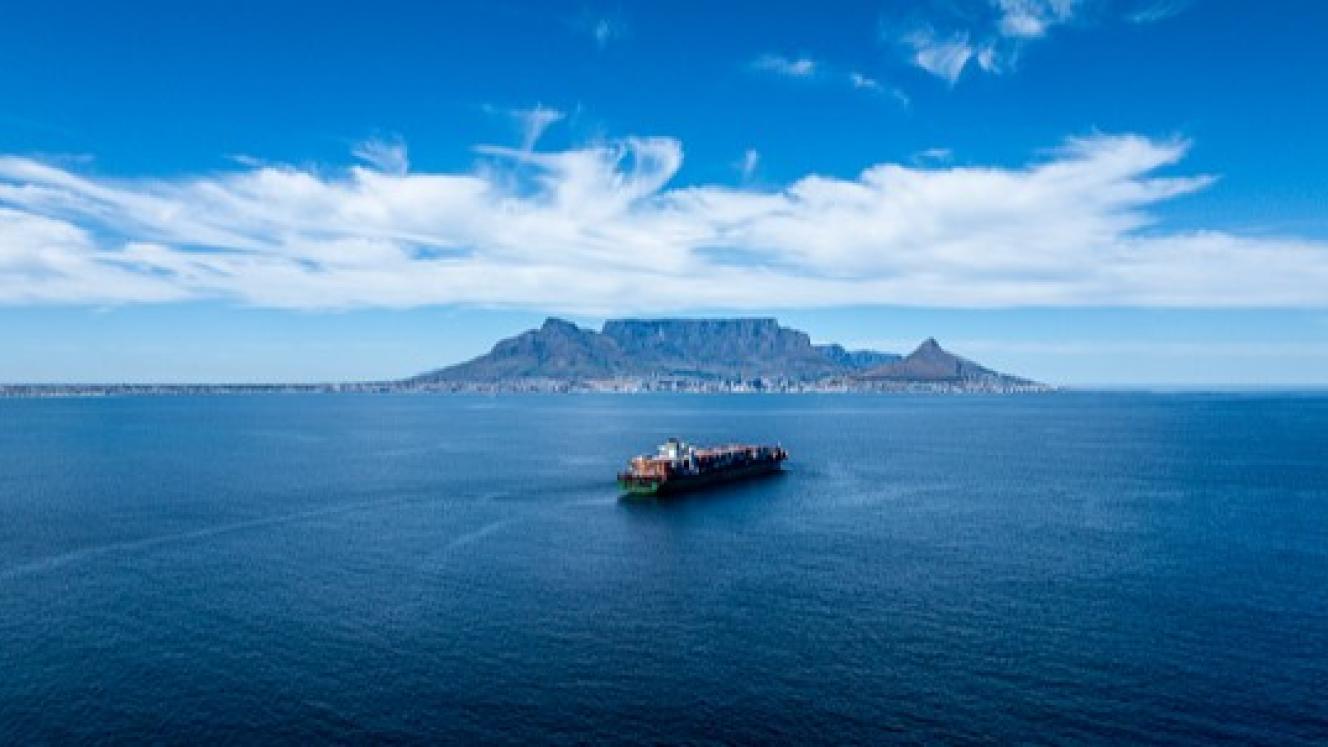
As many as 400 Neo-Panamax and larger container vessels on the Asia-Europe ocean trade are being rerouted around the Cape of Good Hope because of the high level of risk in the Red Sea, further exacerbated by the conflict in the Persian Gulf.
This is according to Dr Jacob van Rensburg, head of Research and Development (R&D) at the South African Association of Freight Forwarders.
In TEU terms, it’s somewhere in the region of 15 000 to 24 000 TEUs.
Why these vessels aren’t necessarily stopping in South Africa on the much longer way around, as opposed to the traditional route through the Suez Canal, is simple, says Van Rensburg – “our ports are too small”.
Referring to vessels capable of handling upwards of 13 000 TEUs, especially ultra large container vessels, which can carry 24 000 TEUs, he added: “A lot of people want these vessels to go and stop in Cape Town, but they’re simply too big.
“Secondly, it doesn’t involve our trades.”
Commenting on industry concerns that an increase in CoGH vessel traffic is neither physically visible nor seen in data shared by Transnet National Ports Authority (TNPA), Van Rensburg says the claim doesn’t hold water.
“The data is everywhere – S&P, IMF, Marine Traffic, Port Watch, Linerlytica. There is a lot of data out there, but unfortunately, there is also a lot of noise.”
To make sense of what’s really going on, he says, requires a bit of verification effort.
What can be confirmed is that vessel traffic through the Suez is about 80% down and that TNPA data shows that there’s a slight increase in vessel-call activity at the ports, “which is encouraging”.
Whereas supply-chain tension in the Strait of Hormuz is expected to further impact the “Suez squeeze”, resulting in even more CoGH rerouting and a potential increase in vessel calls in South Africa, it isn’t a given, Van Rensburg says.