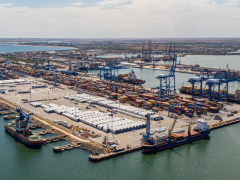
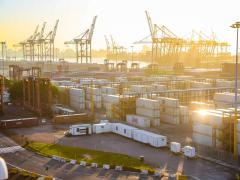
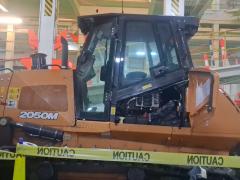
After what has been described as one of the most difficult seasons ever faced by shippers of citrus using the Port of Durban, there seems to be some hope on the horizon following a high-level meeting between Transnet Port Terminals and citrus customers last week. TPT CEO Karl Socikwa and regional GM Zeph Ndlovu gave their commitment to address the challenges facing the industry. And according to Mitchell Brooke, Citrus Growers’ Association logistics development manager, they are already delivering on their promises. It is believed Pier 1 will increase plugin points from 880 to 1 200, Pier 2 from 1 200 to 1 850 and Maydon Wharf from 300 to 600. These upgrades are already under way, according to Ndlovu, who told FTW that the additional plug points would be brought in during the first quarter of the new financial year, coinciding with start of the citrus fruit season. Pier 1 has indicated it will introduce reach stackers in addition to the wind-sensitive Rubber Tyre Gantry cranes (RTGs) in order to minimise wind stoppages which have become commonplace. The introduction of reach stackers will augment the current f leet of empty container handlers to service land side traffic during wind stoppages, said Socikwa. TPT has also committed to hosting another workshop with the citrus industry early next year to give an update of their interventions ahead of the 2014 season. In August this year, the CGA warned the Port of Durban that if productivity and efficiency did not improve, there was likely to be a big swing to conventional vessels – losing container business for the port. This as the combination of reduced port capacity and dramatically increased volumes created major bottlenecks at the port. Durban has handled an additional 100 000 pallets of citrus this year compared to the last three-year average, said Brooke. There were 35 000 containers packed and delivered to DCT which was 8 000 more than in the last three years – while Durban’s storage capacity decreased by 10 000 pallet slots over the three years. In addition, volume from the north has been increasing – and is possibly set to increase further. “In summary there was just too much pressure at the loading facilities to keep up with the additional work load, and in addition increased inspections required by DAFF, holding up railings that needed to be stowed away to allow for new railings to be brought in,” said Brooke. The key challenges, according to the CGA, boil down to proper equipment, additional capacity and better planning and communication, particularly with regard to stack dates. The intervention and engagement with senior management at TPT is an encouraging starting point to address these challenges. “For the moment,” Ndlovu told FTW, “the terminals in Durban are performing well and we have no major issues at hand.” INSERT & CAPTION 1 Pier 1 will increase plug-in points from 880 to 1200. – Zeph Ndlovu INSERT & CAPTION 2 Reach stackers will augment the current fleet of empty container handlers to service land side traffic during wind stoppages. – Karl Socikwa
TPT plugs into citrus exporters’ needs
Comments | 0
© Now Media. This content is protected by copyright and may not be adapted or republished. If you would like to discuss cooperation opportunities, please contact: editor@freightnews.co.za.