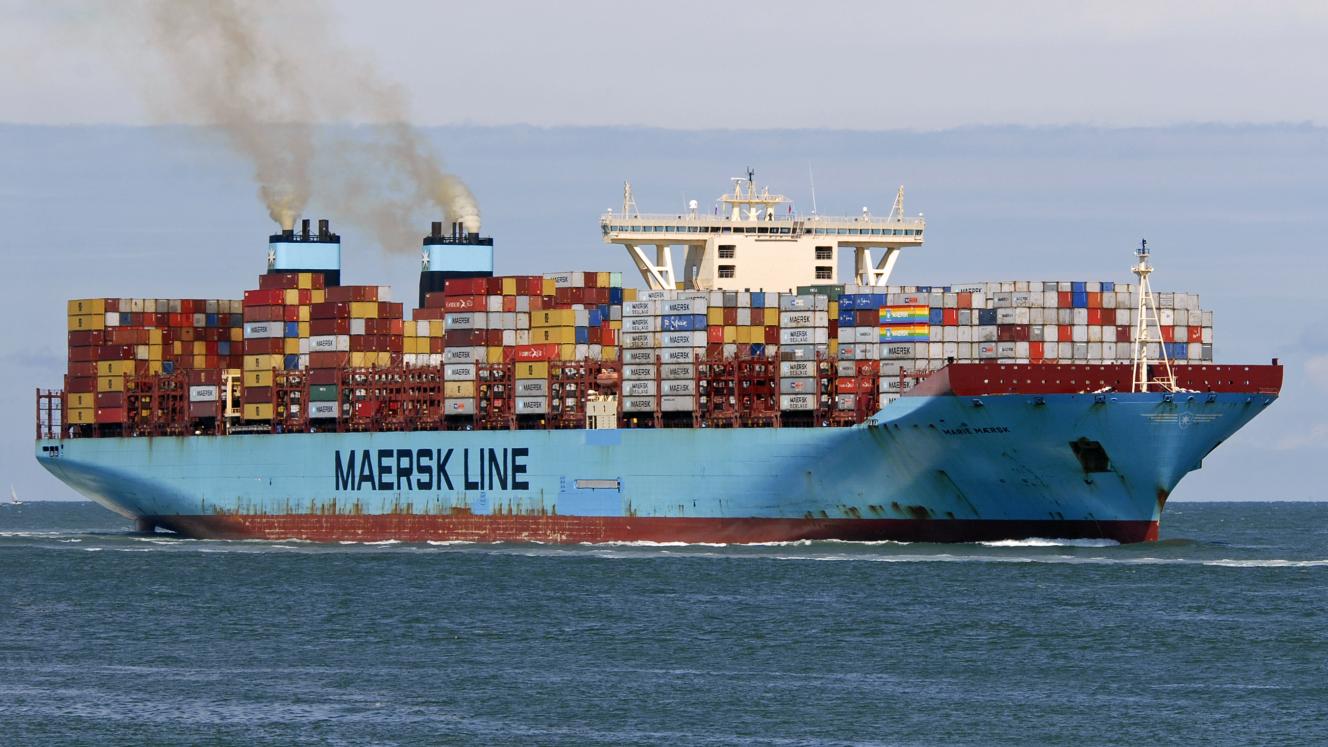
Expansion projects
undertaken by
Transnet National
Ports Authority
(TNPA) at the Durban
Container Terminal (DCT)
will extend its operating
capacity by between seven
and 12 years.
This is according to
analysis by Stellenbosch
University, which suggests
the DCT will now reach
maximum operating
capacity between 2027 and
2036, instead of between
2020 and 2024.
TNPA’s expansion
projects – which include
the deepening, widening
and lengthening of Pier
2 berths, as well as the
reclamation of land
between Pier 1 and the
Salisbury Island naval
base – were calculated to
increase annual container
capacity to around 5.2
million TEUs a year. But
a shortfall has been found
between the equivalent
container stacking yard
capacity and the achievable
container throughput.
For the terminal to reach
its maximum yearly
throughput, the container
stack yard will have to be
adjusted to handle more
containers.
The University’s analysis
also motivates for a change
in stacking system, from
straddle carriers to rubbertyred
gantry cranes at
Pier 2, which it says would
increase annual capacity
of the DCT by around 980
000 TEUs annually.
It further recommends
adoption of a ‘Masterplan’,
which includes a change
in stacking strategy,
along with active dwell
time control and use of
a dry port. The dry port
would enable the DCT to
implement strict container
dwell time control, in
which containers exceeding
a dwell time of four days
could be transported to
and from the dry port on
a shuttle train, thereby
relieving congestion.
The effect of reducing
container dwell time would
greatly increase the overall
container capacity of the
DCT, it argues.
According to the
University, the use of
a dry port as part of
the ‘Masterplan’ would
increase the capacity of
the DCT to around 7.05
million TEUs a year. It
has identified two possible
locations for the facility: a
Bayhead Road site and
the old Durban Airport
site.
The Bayhead Road
site is located a stone’s
throw from the DCT and
would allow for costeffective
transportation
of containers, while the
distant Durban Airport
site would require much
larger capital input.
The University says the
Bayhead Road site, unlike
the Durban Airport site,
could make use of existing
rail and road connections
that serve the DCT, making
it the most feasible location
for a dry port in Durban.
Adoption of the
‘Masterplan’ would extend
maximum operating
capacity of South Africa’s
busiest port to at least
2035, the analysis
concludes.