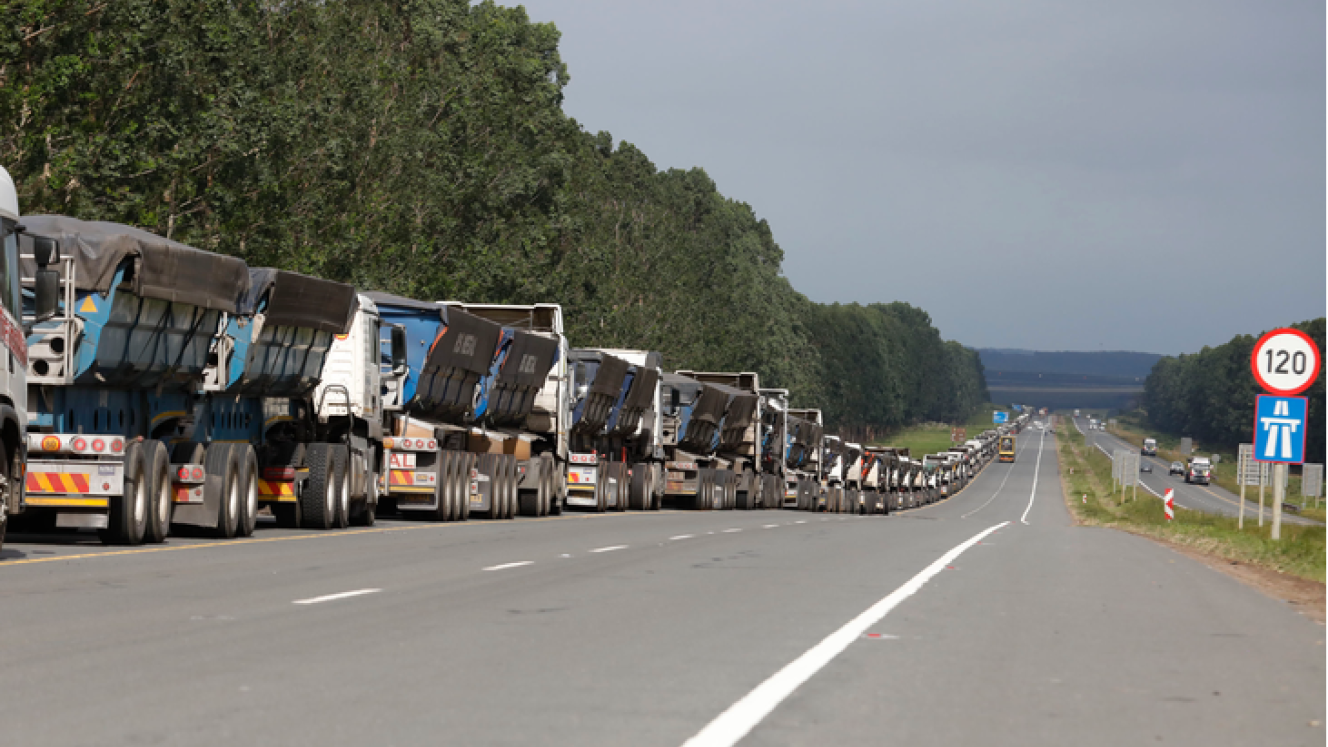
“Security not only involves every step in the movement of goods,” says Bob Garbett, MD of Professional Risk and Asset Management, “but also requires close examination and proactive action in those areas which do not involve the actual transportation.” An example of this, he added, was that employee theft reported in a 2007 document from the giant US supermarket chain, Walmart, exceeded loss from shoplifting by a whopping 50%. “A gang armed with guns can easily steal thousands. A gang armed with pens can just as easily steal millions – and the prison terms are shorter,” said Garbett. “The rate at which companies have suffered losses illustrates the size of the problem,” he added. “Property loss of stock and fixed assets in Africa and the Middle East occurred in a staggering 46% of companies compared to 28% in North America.” And cargo theft is on the increase. It occurs across a range of freight forwarding and storage operations but, according to Garbett, the greatest risk is during ground truck transportation or when vehicles are in the process of being loaded or unloaded. “The losses to owners and insurers are very large,” he said, “with worldwide costs estimated to exceed US$30-billion per year. It is interesting that much cargo theft remains unreported – largely due to the fact that the precise point of disappearance of cargo in the supply chain cannot be pin-pointed. “The illegal sale of stolen cargo undercuts prices in legitimate businesses and also affects small businesses with limited stock that operate on a just-in-time basis.” Strategies for reducing cargo theft vary from one situation to another – and even from one product to another. “The costs of implementing some of the more sophisticated targethardening security controls – such as increased security manpower, cameras and radio frequency detector (RFD) – may be too high for some freight forwarding companies. “However, tight inventory controls are within the region of most small businesses.”
Tight inventory control is key
Comments | 0
© Now Media. This content is protected by copyright and may not be adapted or republished. If you would like to discuss cooperation opportunities, please contact: editor@freightnews.co.za.