There was still a need for improvement in changing the structure of trade between the Southern African Development Community (SADC) and the European Union (EU), said trade and industry minister, Dr Rob Davies, ahead of the first EU/SADC Economic Partnership Agreement Joint Council meeting to be held in Cape Town tomorrow.
He conceded that South Africa had managed to increase exports of value-added products to the EU, thus contributing to South Africa’s industrial development objectives, adding however that more should be done.
Davis said that the first meeting of the Joint Council provided an opportunity for the ministers of the SADC EPA states and the EU to discuss the state of play in the trade between the parties and how the EPA could contribute to inclusive and sustainable development.
The ministers will also consider a number of procedural issues such as the approval of the rules of procedures of the various committees created to oversee the implementation of the EPA.
“The core objective of the SADC EPA Group and EU’s joint efforts in implementing the agreement must be to ensure that the EPA enables sustainable development in the SADC EPA states through changing the structure of trade, including the fundamental structural imbalance in the trade between the parties, and promote value-added trade,” said Davies.
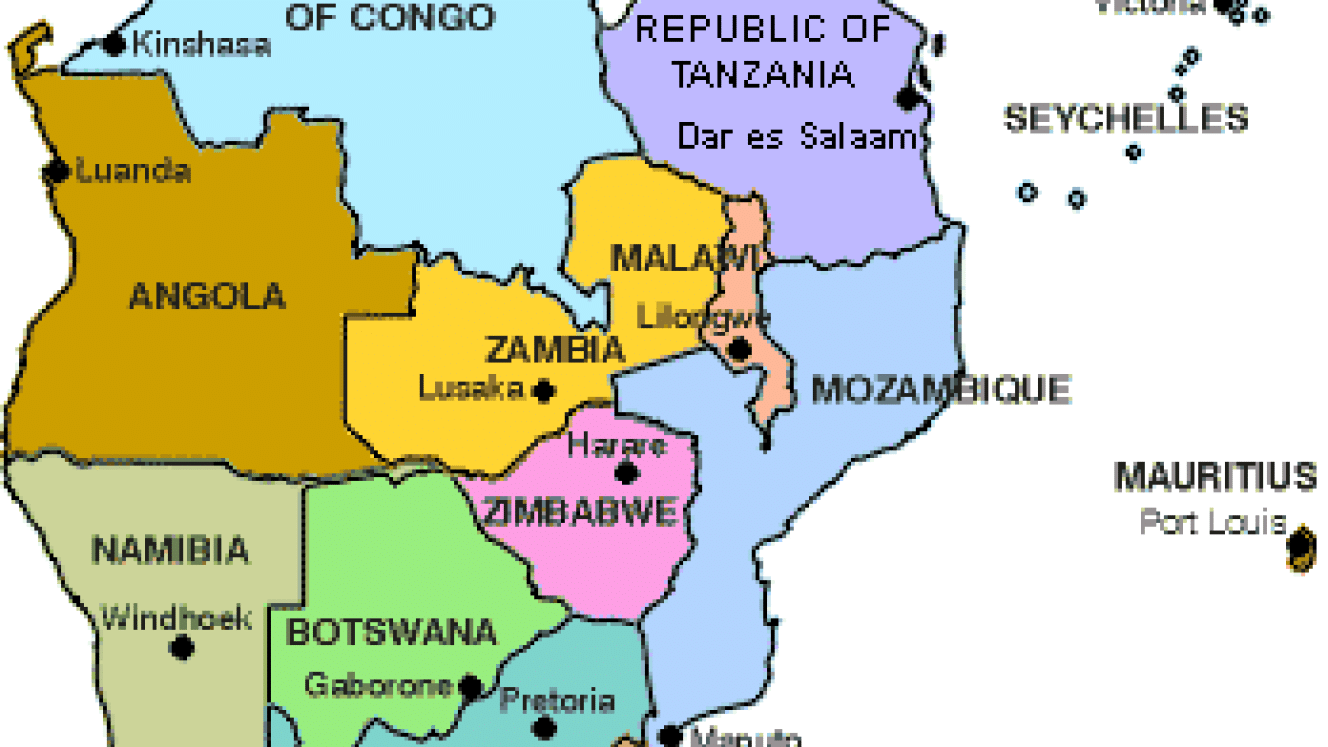
South Africa, Botswana, Eswatini, Lesotho, Mozambique and Namibia signed the Economic Partnership Agreement (EPA) with the EU in June 2016. The agreement provisionally entered into force on 10 October 2016, replacing the trade chapter in the Trade Development and Cooperation Agreement (TDCA) between SA and the EU.
Through the EPA South Africa gained improved market access into the EU for agricultural products such as wine, sugar, ethanol and fruit, as well as for fisheries. SA exports to the EU have increased from R214 billion in 2015 to R262 billion in 2017. SA exports to the EU are led by vehicles which contributed 26% of total exports in 2017, followed by precious stones and metals, nuclear reactors, edible fruit and nuts and ores, slag and ash which contributed 17%, 8%, 8% and 7% respectively in the same year.