The chief engineer of the container ship that destroyed Baltimore's Francis Scott Key Bridge has admitted failing to report a known hazardous condition linked to the vessel's power-loss risk, entering into a deferred prosecution agreement with US authorities.
The United States Attorney's Office for the District of Maryland announced on Thursday that Dali chief engineer Karthikeyan Deenadayalan had admitted to conduct constituting a criminal violation of the Ports and Waterways Safety Act.
According to the statement of facts, Deenadayalan knew the vessel was operating with an unsafe fuel supply pump and failed to report the condition to the US Coast Guard.
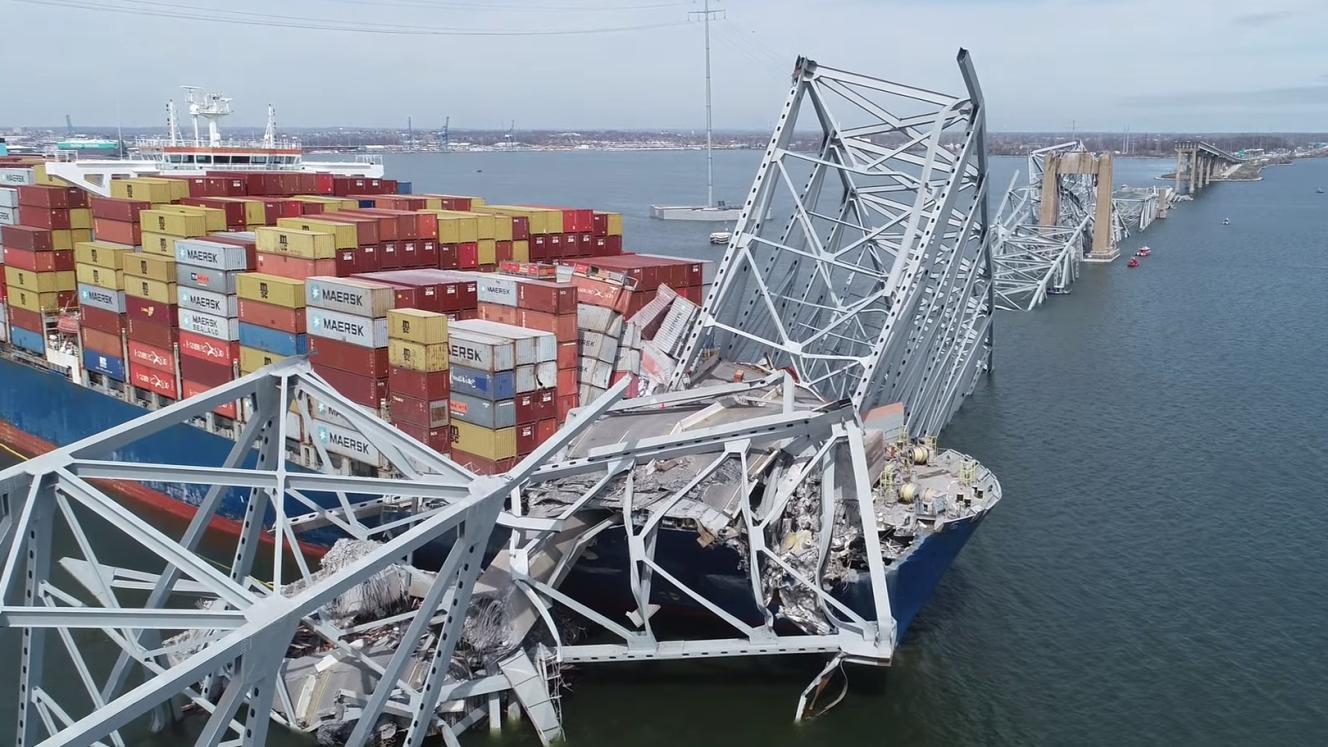
The case stems from the disaster that crippled maritime logistics in the region on March 26, 2024, when the Singapore-flagged container vessel departed the Port of Baltimore bound for Sri Lanka. Roughly 30 minutes into its voyage, the vessel suffered a complete electrical blackout that cut off its propulsion and steering capabilities.
The crew alerted local authorities to halt traffic onto the Francis Scott Key Bridge, but the ship remained uncontrollable. Drifting at approximately eight knots, the Dali struck one of the bridge's main structural support columns, causing the central truss span to collapse into the Patapsco River within seconds. Six road construction workers were killed.
According to a statement issued by US Attorney for the District of Maryland Kelly Hayes, the agreement defers prosecution of the criminal charge provided Deenadayalan complies with strict conditions.
The Indian national served as chief engineer when the Dali struck the bridge and previously held the same role on its sister ships, the Maersk Saltoro and Cezanne.
Known hazard not reported
"Deenadayalan acknowledged that the unsafe pump, known as a flushing pump, lacked redundancy, which compromised the vessel's safe navigation and ability to recover from the loss of power," Hayes said.
"He admitted that he knew that the inability to recover from a loss of power could adversely affect the safety of the vessel itself, as well as any bridge, structure or shore area."
Alleged cover-up under scrutiny
Investigators also alleged an intentional cover-up of the mechanical risks. Court documents detailed communications between Deenadayalan and Synergy technical superintendent Radhakrishnan Karthik Nair, who faces separate criminal charges.
"Deenadayalan further admitted that Nair directed him to send a 'convincing' email to the charterer of the Dali so that the charterer would not ask additional questions about fuel consumption on the Dali, preventing the use of the flushing pump from being revealed," Hayes said.
Hayes commended the joint investigative efforts of the FBI, Coast Guard Investigative Service and the Environmental Protection Agency's Criminal Investigation Division.
Deenadayalan's agreement pauses his individual prosecution, but the broader legal battle continues.
US authorities are also pursuing related criminal cases against Synergy Maritime Pvt Ltd, Synergy Marine Pvt Ltd and Nair in connection with the bridge collapse.
According to the Department of Justice, the broader case includes allegations that known hazardous conditions were not reported to the US Coast Guard and that false statements and documents were provided during the subsequent investigation.