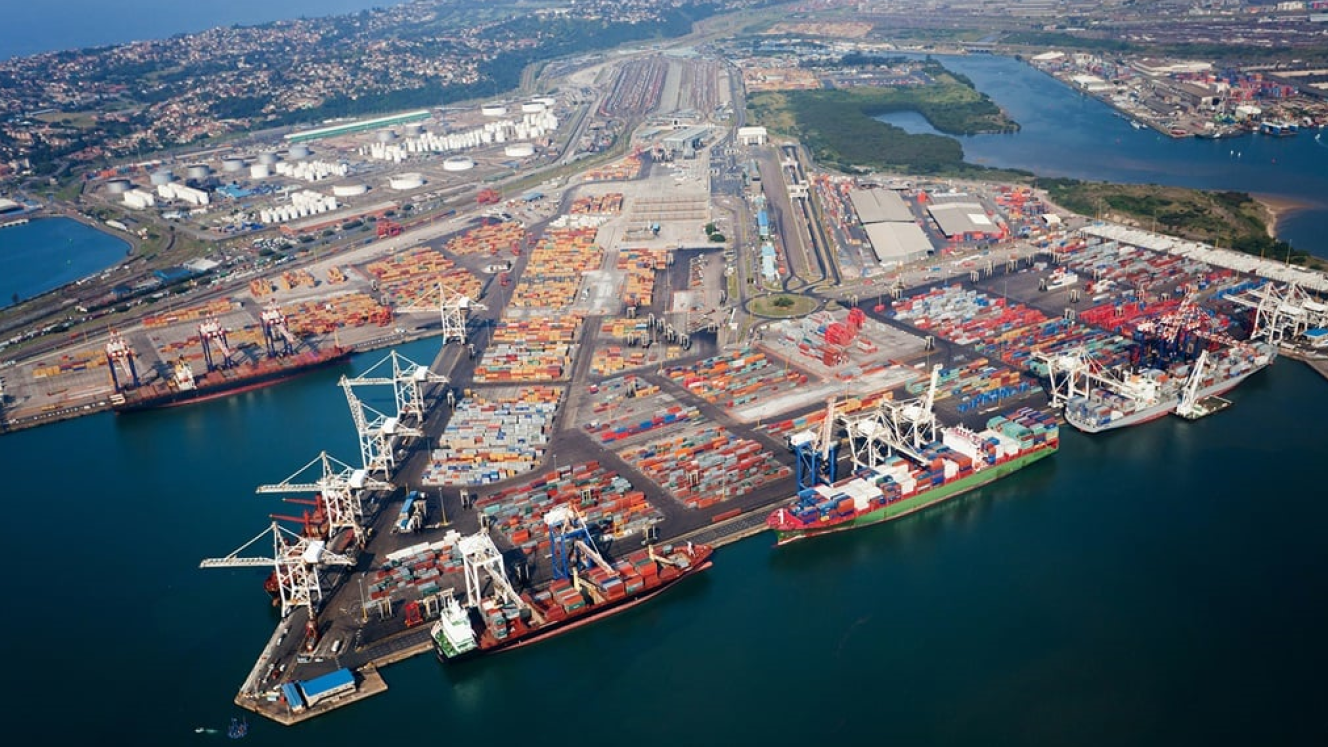
Major investments in ports all along the African shoreline are among the most visible indications of the economic revival of the continent following decline during most of the 40 years that FTW has been in existence. It is not that the publication ignored Africa – we were among the first in the world to introduce regular features on developments in countries in the Southern African Development Community. What we have seen over the past decade is the rebirth of ports like Walvis Bay, Maputo and Beira. They are the pioneers of public private partnerships which have injected much-needed capital and expertise into the ports. But they are facing competition – upgrades have started or are on the cards for Abidjan (Ivory Coast), Lobito and Cabinda (Angola), Doraleh (Djibouti), Mombasa (Kenya), Dar es Salaam and Zanzibar (Tanzania), and Nacala (Mozambique). All-new ports are planned for Lamu (Kenya), Ibaka (Nigeria), and Bagamoyo (Tanzania – also scheduled to be the biggest port in Africa), and Badagry (Nigeria). South Africa has the new deepwater port of Ngqura and the planned dig-out port in Durban. Most of the port development plans include the upgrade of existing road and rail links, or the building of new ones. Investment is flowing in as Africa now has the world’s fastest-growing economy, according to the African Development Bank. A report released by the bank in July this year predicts an average growth rate of 6% from 2013-2015, with one-third of African countries currently enjoying growth rates currently above 6%. It is a far cry from the situation 40 years ago when a combination of nationalisation by African countries, the Cold War, coups and conflict drove investors and multinationals out of the continent. So much so that it took the Chinese to rediscover the riches and potential of Africa. Having been exiled from Africa after building the Tazara Railway Line in the 1970s, China announced its return in 2000 with the first forum on China- Africa co-operation (FOCAC), which was held in Beijing and attended by representatives from 44 African states. The investment paid off, and China-Africa trade was worth almost $200 billion in 2012. Trade with South Africa – which was not at the forum – makes up $60 billion of the total. Looking after Chinese interests are an estimated one million Chinese in Africa, with the largest communities in South Africa, Egypt and Nigeria. But, the rest of the world has woken up to the potential of Africa. On FTW’s visits to neighbouring states (we are the only South African publication to regularly send teams into the SADC countries), we meet investors from Europe, South America, Britain, the United States and Japan. There are even a few Australians and (too few) South Africans. While exports of mostly raw materials are growing, the real potential for economic growth and social upliftment lies with intra- Africa trade, and it is here where logistics companies with South African roots may still find opportunities. According to the UN Conference on Trade and Development (Unctad). Africa has the lowest intraregional trade out of all the continents, at only 11%. African leaders recognise this, and in January 2012 a meeting of African leaders resolved to eliminate intra-African trade barriers to boost regional trade. Having cleared the field for increased regional trade – and the economic growth that it promises – African nations need to provide the goods to sell to each other, or foreign competitors will fill the vacuum, the Economic Development in Africa Report contends. It also recommends that African governments strengthen the private sector by making finance more accessible and less costly, and by enhancing mechanisms for government consultation with the private sector. Short-term unexploited opportunities for regional trade in Africa are to be found particularly in agriculture, the report says. One of the results of the 40-odd years of decline is that Africa accounts for only 1% of global manufacturing. It was not always like that. Empty and neglected factories found throughout southern Africa bear silent testimony to the once vibrant manufacturing sector. An additional challenge noted by the report is that Africa has some of the highest costs in the world for transporting goods. A combination of investment in upgrading and adding logistics infrastructure combined with innovative cost-saving approaches to logistics management is needed to unlock the potential for the next 40 years. INSERT 1 Africa - the potential • Africa has 24% of the world’s agricultural land, but accounts for only 9% of its production. • Trade within the West African Economic and Monetary Union could increase threefold if all intrastate roads linking the countries of the Union were paved. • Exploiting the trade potential between neighbouring countries could increase intraregional trade by 173%. • Manufacturing – better education and a young workforce could power an industrial revolution in Africa. In some countries half or more of the population is under 25 years of age. INSERT 2 Africa - the good • There are fewer wars and conflicts than there have been during periods over the past 40 years. • Africa represents one of the biggest markets in the world: The number of people in Africa has grown from 221 million in 1950 to over a billion. • Africa’s economy is projected to grow by 4.8% in 2013 and accelerate further to 5.3% in 2014. • Sub-Saharan Africa’s average literacy rate has nearly tripled in percentage terms over the past four decades, rising from 23% in 1970 to 65% • Average life expectancy in sub- Saharan Africa is now 52 years, up from 44 years in 1970. In 2010, Lesotho had sub- Saharan Africa’s lowest life expectancy, at 46 years, while the Comoros Islands lead the region at 66 years. INSERT 3 Africa - the bad • The shares of both Africa and sub-Saharan Africa in world exports and imports fell significantly between 1970 and 2011. • During the period from the early 1960s to the late 1980s, Africa had more than 70 coups and 13 presidential assassinations. • In six countries life expectancy has fallen since 1970: Democratic Republic of the Congo, Lesotho, Swaziland, South Africa, Zambia and Zimbabwe. 25% of people in Sub-Saharan Africa are undernourished. • The growth of 33% of African children is stunted by hunger. INSERTS 6% The projected growth rate from 2013-2015. $200bn The value of China-Africa trade in 2012. $200bn
The world wakes up to Africa's potential
Comments | 0
© Now Media. This content is protected by copyright and may not be adapted or republished. If you would like to discuss cooperation opportunities, please contact: editor@freightnews.co.za.