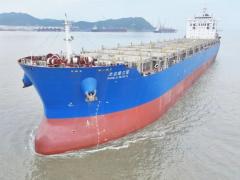
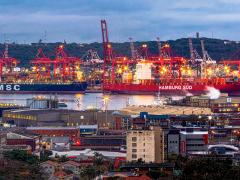
A recent incident that saw 29 boxes going over the side of the Seroja Lima, a Maersk charter, on the way out to, and at, the anchorage off the Port of Ngqura has become a legal free for all. According to information supplied to FTW by Peter Newton, director of Seaboard, the containers were lost after the vessel was ordered out to the anchorage due to strong underwater turbulence inside the port. In addition, there were a number of boxes that fell down but did not go overboard and were badly damaged. “Cargo owners will no doubt claim against the ocean carrier (Maersk),” Newton added, “which, in turn, will possibly pursue the vessel owner for putting to sea in an unseaworthy condition.” But, he also noted, the vessel owner may well counter that his hurried departure was on the grounds of an unsafe berth. Malcolm Hartwell, a master mariner and SA director of the international legal firm, Norton Rose Fulbright, told FTW: “Our clients have claims against various charterers that issued bills of lading on the basis that they have breached the contracts of carriage evidenced by those bills of lading,” he said. “They also have direct claims against the shipowner for its apparently negligent conduct in sailing into severe weather without re-lashing the containers.” Hartwell also revealed that security had been provided to Norton Rose’s clients by the owners of the vessel and its P&I Club. Those claims, he added, will either be settled by the owners and club or resolved by way of litigation in the High Court in Port Elizabeth. “It is likely that owners and time charterers will have to resolve a dispute about whether the charterers sent the owners to an unsafe port and who was ultimately responsible for the vessel sailing before the cargo was re-lashed.” Given that the vessel was told to leave the port by the Transnet National Ports Authority (TNPA), FTW also asked Hartwell whether there could be action taken by any of the parties against the port management for ordering the vessel to leave the port – eg, if the order was “immediate” enough to force the vessel to sail before the cargo was properly secured. “This dispute may involve the port authorities,” he said. “But this will depend on the circumstances surrounding the vessel’s sudden departure from port.” Hartwell also pointed out that Maersk, and the other charterers Hamburg Süd; the owners; the stevedores; and the port authorities had all appointed maritime lawyers to protect their interests. “Whether this incident gives rise to a slew of litigation in various jurisdictions and under various contracts,” he added, “will depend on whether those ultimately responsible for the incident decide to settle the claims commercially – or litigate them.” Returning to the question of TNPA liability in the matter, Hartwell said if the port had directed the vessel to leave immediately, a claim might in principle lie against the port. But they may escape liability on the basis that the owners should have first lashed the cargo. “Effectively the port would be saying they may have ordered the ship out, but that was not the legal cause of the loss which was the owner’s failure to lash the cargo.”
The gloves are off following boxes lost overboard
Comments | 0
© Now Media. This content is protected by copyright and may not be adapted or republished. If you would like to discuss cooperation opportunities, please contact: editor@freightnews.co.za.