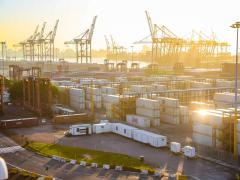
The freight and logistics industries are holding their breath that sense will prevail around South Africa’s new customs bills currently awaiting promulgation in Parliament. The bills, which are on the last leg of their journey to becoming law, are still being contested due to the massive impact they will have – that of City Deep losing its inland port status. Mike Walwyn, chairman of the Port Liaison Forum at the Cape Chamber of Commerce and vice chairman of the South African Association of Freight Forwarders (Saaff), believes the battle is far from over. “There seems to be light at the end of the tunnel with customs stepping into serious discussions with the industry,” he told FTW. “We hope that reason will prevail and that amendments will be made to the bills before they are promulgated.” Role-players like Walwyn and Pat Corbin of the Johannesburg Chamber of Commerce and Industry are of the opinion that with customs now participating in conversations and workshops there is a much greater chance of seeing amendments made. Corbin told FTW his discussions with Customs were of such a sensitive nature and at such a critical stage he preferred not to comment, but said there was a “lot of hope” around the concerns being addressed timeously. The bills have been at the centre of controversy since the drafting of the new legislation started in 2005. According to Quintus van der Merwe of Shepstone and Wylie Attorneys, the greatest concerns are that the bills effectively rid City Deep of its inland port status. But, said Van der Merwe, even if the bills are promulgated in their current form it will be years before they are implemented as the regulations that accompany the bills have yet to be drafted. Explains Shepstone and Wylie customs specialist, Mark Boucher: “The act cannot take effect until the rules and regulations to which the act refer have been drafted, sent out for public comment and accepted. That process in itself takes time. There is no indication how far customs is in drafting these regulations but it would seem they have not yet started.” Therefore, he said, the industry had a reprieve and time to continue lobbying customs for amendments. Even if the bills are not amended there is the chance, say the experts, that the regulations can be drafted in such a way that the situation can be rescued. “Now more than ever industry has to rally together and work with customs to make sure they have a very clear understanding of what the impact of these bills will be,” said Boucher. Customs on the other hand has maintained that the bills will create a balance between customs control and trade facilitation. Under the current Customs and Excise Act of 1964 container operators can move containers in bond from a port of entry to an inland container terminal without submitting a customs clearance declaration. The containers are moved on the basis of a manifest. No security is required and liability for the removal rests with the container operator. After the arrival of the goods at the inland container terminal the importer will clear the goods for another permissible customs procedure or for home use and pay the duties. According to Sars, the current situation does not provide them with adequate information to determine any possible safety, security, fiscal and economic risks in relation to the goods before being transported inland. For Walwyn the result of this bill is clear – cargo will be cleared at sea ports resulting in more congestion as the capacity of the already struggling ports will be tested, while less cargo will be moved on rail. INSERT & CAPTION 1 There seems to be light at the end of the tunnel with customs stepping into serious discussions with the industry. – Mike Walwyn INSERT & CAPTION 2 Now more than ever industry has to rally together and work with customs. – Mark Boucher INSERT & CAPTION 3 Discussions with Customs are at a critical stage but there’s a lot of hope that the concerns will be addressed timeously. – Pat Corbin INSERT & CAPTION 4 It will be years before they are implemented as the regulations that accompany the bills have yet to be drafted. – Quintus van der Merwe
The dreaded Customs Bills
Comments | 0
© Now Media. This content is protected by copyright and may not be adapted or republished. If you would like to discuss cooperation opportunities, please contact: editor@freightnews.co.za.