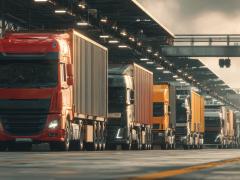
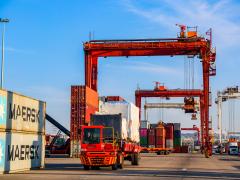
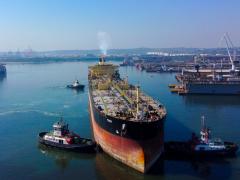
The reefer container industry has grown at a pace of more than 15% a year over the past five years while the worldwide perishable trade grew by just 5%.This has been to the detriment of specialised reefer vessels, according to Alexis Michel, senior vice-president container logistics and reefer at shipping line CMA CGM. “However, with less temporary pressure on crude costs and because of the recent reefer tonnage scrapping programme, we have noted some sort of revival of the specialised reefer vessels,” Michel said. “But it begs the question – for how long – as the transfer from reefer vessel to reefer containers in the perishable industry has been an ongoing trend now for years.” Ranked in the top three of the world’s container shipping lines, CMA CGM has a strong involvement in containerised reefer logistics, says Michel. “We operate the second largest container fleet in the world, and we are present in all segments of the perishable market – and that includes fruit, seafood, meat and poultry as well as dairy. Our main reefer services are deployed in the Caribbean region, South America, Africa, Asia and the Pacific Rim.” According to Michel, while challenges in the industry vary depending on the type of cargo, the successful transport of perishables is ultimately about expertise. “Carriers must be very specialised in the markets they serve,” Michel said. “And as perishables are very time-sensitive, clockwork services, transit time and days of call are very often central in the negotiation of transport contracts with the shippers. In fact they’re often more important than the tariff,” said Michel. Another key element, he added, is reliable reefer equipment. “As a consequence, from a profitability perspective, it is important for the carriers to consider the extra cost of equipment and energy if they want to succeed in this market segment.” And Michel believes it makes sense to invest in the perishable market in view of its continued growth. “We estimate that 200 million tons of perishable cargo will be carried by sea in 2015, and the proportion of containerised cargo will reach more than 70-75% at this time. So the outlook is quite bullish.” With technology providing new opportunities in longhaul transportation, along with more embedded computing applications or technology on board reefer containers, the outlook is positive, he told FTW. “GPS, controlled atmosphere and various types of probes make it possible to ensure the safe transportation of perishable cargo on very long journeys without alteration of the shelflife of the cargo.” CAPTION: Keeping it fresh ... CMA CGM is present in all segments of the perishable market.
Technology provides new opportunities for long-haul transportation
Comments | 0
© Now Media. This content is protected by copyright and may not be adapted or republished. If you would like to discuss cooperation opportunities, please contact: editor@freightnews.co.za.