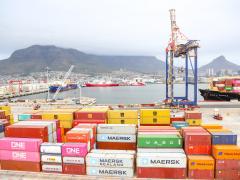
EXPORTERS OF certain perishable products still struggle to get EUR1s from customs in Cape Town, according to Gavin Cooper, Western Cape chairman of the SA Association of Freight Forwarders (SAAFF). These are vital certificates issued by customs for goods going into the European Union (EU) under the preferential trade agreement and, without them, exporters are lost, he told FTW. It’s no new problem, Cooper added, but has been extensively debated with the authorities since last year. “At our meeting with Cape Town International Airport last November the matter - specifically related to the problem of wild flower exports - was raised with branch manager, Johan Malgas. “He suggested that there should be a workshop to iron out problems with the issuing of EUR1s, but nothing has been forthcoming.” With the fruit export season coming up, SAAFF again warned customs of the problems and the delays. “But they appeared to be oblivious of the problem or incapable of rectifying it,” said Cooper. “It is our feeling that - as Pretoria controls the show, but most of the exports from SA which require EUR1s come from the Cape - Pretoria is just out of touch with the reality of the situation.” And all the industries which need a EUR1 certificate - especially fruit, flowers, wine and other perishables - are still battling to receive them timeously from the SARS customs offices at either the airport or Table Bay, Cooper added. “This matter,” he told FTW, “has been on the agenda of our regular meetings with customs almost since the day the EU Trade Agreement was rushed into place.” It’s a classic example of the Department of Trade and Industry and the politicians being oblivious of what he described as “the day-to-day nitty gritties” of processing the documentation needed to comply with the agreement. The problem with customs, as he sees it, is insufficient staff - “in numbers, training and experience” - to handle the task. “The situation has not improved at all,” said Cooper, “and, if anything, appears to be getting worse - as more and more EUR1s are issued.” And this, he added, just applies to the day-to-day problem of having an EUR1 stamped. “If one looks at the complexities of the Protocol itself,” Cooper said, “and the definitions of ‘orginating products’ which may qualify for preferential duty being ‘sufficiently worked or processed products’ - then the matter becomes worse.” The definitions are complex, according to Cooper, and often frighten off a potential exporter wanting his goods classified. “The customs officers who handle the applications are sadly ill trained, inexperienced and short of time to apply their minds to the documentation presented to them.” This whole issue, Cooper told FTW, has now become “arduous, risky and costly” for perishable exporters and is contrary to government’s policy of promoting and encouraging exports. “If you look at the draconian, illogical and inept manner in which customs is now forcing compliance with the Customs Act onto exporters you can see what it all means. “Recent amendments to the Act are so far-reaching - in fact, in SAAFF’s view, downright unconstitutional - as to potentially be able to put importers, exporters and agents out of business if they are ever invoked.”
‘Tardy Customs delays vital EU certificates’
Comments | 0
© Now Media. This content is protected by copyright and may not be adapted or republished. If you would like to discuss cooperation opportunities, please contact: editor@freightnews.co.za.