Tanzanian ports will come under the greatest pressure to accommodate economic growth in the region over the next three years. The country is expected to enjoy the highest growth in real gross domestic product (GDP) in the Southern African Development Community (SADC), according to the January 2019 World Bank Global Economic Prospects report. Dar es Salaam also serves Zambia (expected growth 3.6% - 3.8%) and the Democratic Republic of Congo (DRC) at 4.6%-5.9%. Tanzania’s growth of between 6.8% and 7% will be supported by public
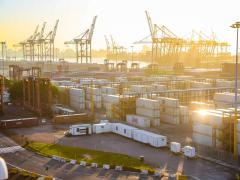
infrastructure investment and strong agricultural growth, according to the report. In mid-2018 the Tanzania Ports Authority (TPA) announced that it would be investing US690 million in upgrades to the port of Dar es Salaam. Construction on Bagamoyo Port which, upon completion is expected to be the largest in East Africa, is on schedule, according to Tanzanian deputy minister for trade, industries and investment Stella Manyanya. She told parliament last year 2018 that commercial operations in the new port were expected to commence in 2020 and 2021. Construction of the port is being carried out through
a collaboration between companies from China and Oman. Over 190 investors were expected in the adjacent Bagamoyo Special Economic Zone (SEZ), including a manure processing plant that would put up by the government of Oman, she said. The SEZ is being developed by the Bagamoyo Special Economic Zone Authority, the Tanzania Ports Authority, China Merchant Holding International and Oman’s State Government Reserve Fund. One of the ports competing for traffic on the east coast is Beira in Mozambique. “The first quarter of 2019 has not been great due to
the situation in Zimbabwe,” says Christian Roeder, chief commercial officer of Beirabased J&J Transport Africa. “We are cautiously optimistic for business on the Beira Corridor in 2019. It will be tough, though. “Recently, Beira has seen increasing demand for movements into the DRC, mainly containerised sulphur. “The J&J Group continues to invest in warehouses along the corridor to ensure we continue to offer second-tonone quality service that will be sustained through peaks,” he told FTW. In November 2018 the Mozambican government approved investment of US$290 million in the port
of Beira by concession holder Cornelder de Moçambique (CdM), after extending the concession for 15 years. With the collapse of the Maputo Development Corridor, the operators in the port of Maputo will have to find a new champion to help grow volumes through the different facilities. There has been substantial investment in the port, which moved a record 19.5 million tons in 2018 – a 7% growth on 2017, according to the Maputo Port Development Company (MPDC). Partnership between Transnet Freight Rail and Mozambican rail operator CFM saw a 50% growth in bulk cargo shipped by rail in 2018 compared to the previous year. DP World has invested heavily in the container terminal, and will be able to handle up to half a million TEUs a year by 2020. With relatively low growth predicted in its feeder region, the port will be competing against Richards Bay and Durban for traffic. In South Africa, container volumes are down year-onyear, according to Transnet National Ports Authority (TNPA). In February this year South African ports handled 361 496 containers, compared to 462 330 in the same month in 2018. January’s figures are 348 642 TEU in 2019 and 399 400 in 2018.