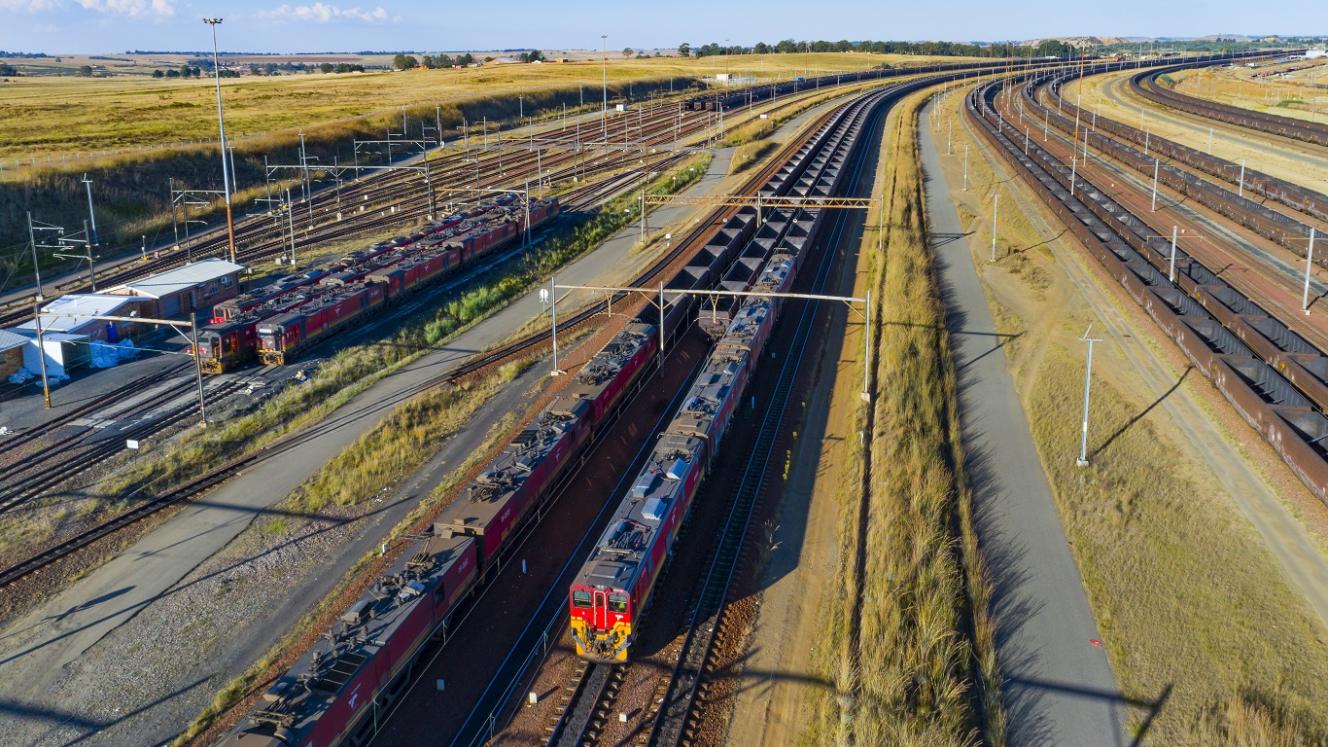
Mbabane – Swaziland Railway’s Inland Container Depot is celebrating its 15th year of operations with expansion plans needed to handle increased volumes. “For the past years we have experienced an average 15% growth in business. More of it is containerised traffic,” said Bhekisisa Manyatsi, manager of the depot. Located in the heart of the Matsapha Industrial Estate and radiating road and rail lines like spokes of a wheel, Swaziland’s dry port has been essential to sustaining the country’s industrial sector. “Businesses find rail traffic is fast and safe. From the time a container is sealed until the consignee breaks the seal the cargo is secure. Because containers are weatherproof, cargo damage is lessened compared to open wagon transport, and proper packing means less breakage,” said Manyatsi. Growing customer preference for container transport means the railway must expand its physical layout to accommodate longer boxbearing trains. Negotiations are under way to buy adjacent government property that would allow the present tracks to lengthen. Of the port’s 50 000 m2, 26 000 are used for operations. The site expansion will increase by 7000 m2 sqm or about 20% the operational area, Manyatsi said. Two Italian-made mobile cranes and a container lift straddling one track can quickly offload trains, and their capacity to do so is only limited by the size of trains now able to use the dry port. Most Swazi container traffic travels to and from Durban (560 km), and Swazi crews are traded for SA crews at the border (150 km away) for a trip that takes roughly two days. The depot also handles transit traffic for trains en route to Mpaka in the eastern lowveld, where coal is shipped to SA via Komatipoort. Though a government parastatal, Swaziland Railway receives no government subsidies. But the wellmanaged company delivers an annual dividend to government, and ploughs its share of profits back into operations.
Swaziland dry port celebrates 15-year anniversary
Comments | 0
© Now Media. This content is protected by copyright and may not be adapted or republished. If you would like to discuss cooperation opportunities, please contact: editor@freightnews.co.za.