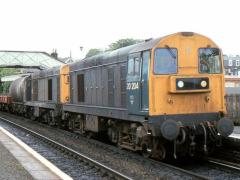
MBABANE – October this year marked the golden anniversary of Swaziland Railway Company which was born for one purpose only: to haul iron ore to Mozambique for shipment overseas. While the railway lines have expanded since then, other than a few excursion trains on special occasions the system has solely been used to move freight. King Mswati officiated at the golden anniversary celebration held at the rail head in Sidvokodvo, halfway between the Ngwenya iron mine and the Mozambique border. Altogether, 301 km of track, including a north-south line, transports transit rail traffic from Mananga border gate at SA’s Mpumalanga province to Goleta at KwaZulu Natal and onward to either Durban or Richards Bay. Transit traffic accounts for the majority of the company’s revenue. Inland cargo from DRC, Malawi, Zambia and Zimbabwe can cut 270 km of transport distance to Gauteng by rolling through Swaziland. Further transit traffic will significantly boost Swaziland Railway’s revenues upon the completion of a R17-billion rail line under construction from Lothair in Mpumalanga to Sidvokodvo. Built in partnership with Transnet Freight Rail (TFR), the new line – at 146 km – will expand the country’s rail system by a third (96 km will be in Swaziland) upon completion in 2017. Although in theory offering Gauteng rail freight shippers a way to save transport time and distance by going through Swaziland en route to Maputo, the line is being promoted as a means to move SA coal. Swaziland Railway’s first train engines were displayed to King Mswati at the 50th anniversary event. From 1964 to 1975, the company rented locomotives from Caminhos de Ferror de Moçambique, the Mozambique national rail operator. When the line to Maputo from Swaziland was closed during the Mozambique civil war, locomotives were secured from SA for use in the north-south line. Swaziland Railways is leasing from Thelo Rolling Stock, the SA rail financing firm, four mainline RL 305CC-3 dieselelectric locomotives that are accompanied in the deal by 75 TFR-built ore wagons, at a cost of R75m. The locomotives come from the National Railway Equipment Company in the US and RRL Grindrod in SA and like the rolling stock were acquired on a ten-year lease. The new equipment will service one of Swaziland Railway’s most-profitable transit traffic commodities, magnetite from Phalaborwa en route to Richards Bay. Commodities moved by rail out of Swaziland include raw sugar, canned fruit, coal and textiles, and rail is a vital means to import fuel, wheat and cement into Swaziland.
Swazi Rail celebrates
Comments | 0
© Now Media. This content is protected by copyright and may not be adapted or republished. If you would like to discuss cooperation opportunities, please contact: editor@freightnews.co.za.