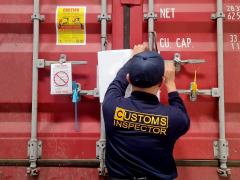
As more and more global and South African companies – many of them in the pharmaceutical sector - expand their footprints across Africa, forwarders are gearing up to serve this specialist niche. But as with all perishable transport, the pharmaceutical industry is demanding – particularly in an environment where power issues, infrastructure problems and language barriers create additional challenges. And it’s a sector where there’s zero tolerance for error. Lesotho logistics operator Kayhil Freight sees the pharmaceutical sector as one of significant potential. “Using a reputable player who knows the ropes is essential,” says director Hilary Woelk. “The consignee in Lesotho is required to obtain a permit for each perishable delivery,” he told FTW. “The permits are issued by the Department of Agriculture and may only be issued for a calendar month.” And obtaining a permit is not always easy. “If the product is available in Lesotho then a permit will not be issued – and each month a schedule must be provided, attached to the used permits, exhibiting the quantities imported for that period.” Although according to Woelk, most traders ignore this. “In terms of transportation, a truck carrying perishables may not carry non-perishable cargo and may only arrive at the border during normal business hours, Monday to Friday, 08:00 to 16:00.” Kayhil has a customs clearance agent on both the Lesotho and South African sides of the border. “We also pay VAT and duties on behalf of traders and offer an overnight service from three origins.”
Strict permit rules govern pharma transport sector
Comments | 0
© Now Media. This content is protected by copyright and may not be adapted or republished. If you would like to discuss cooperation opportunities, please contact: editor@freightnews.co.za.