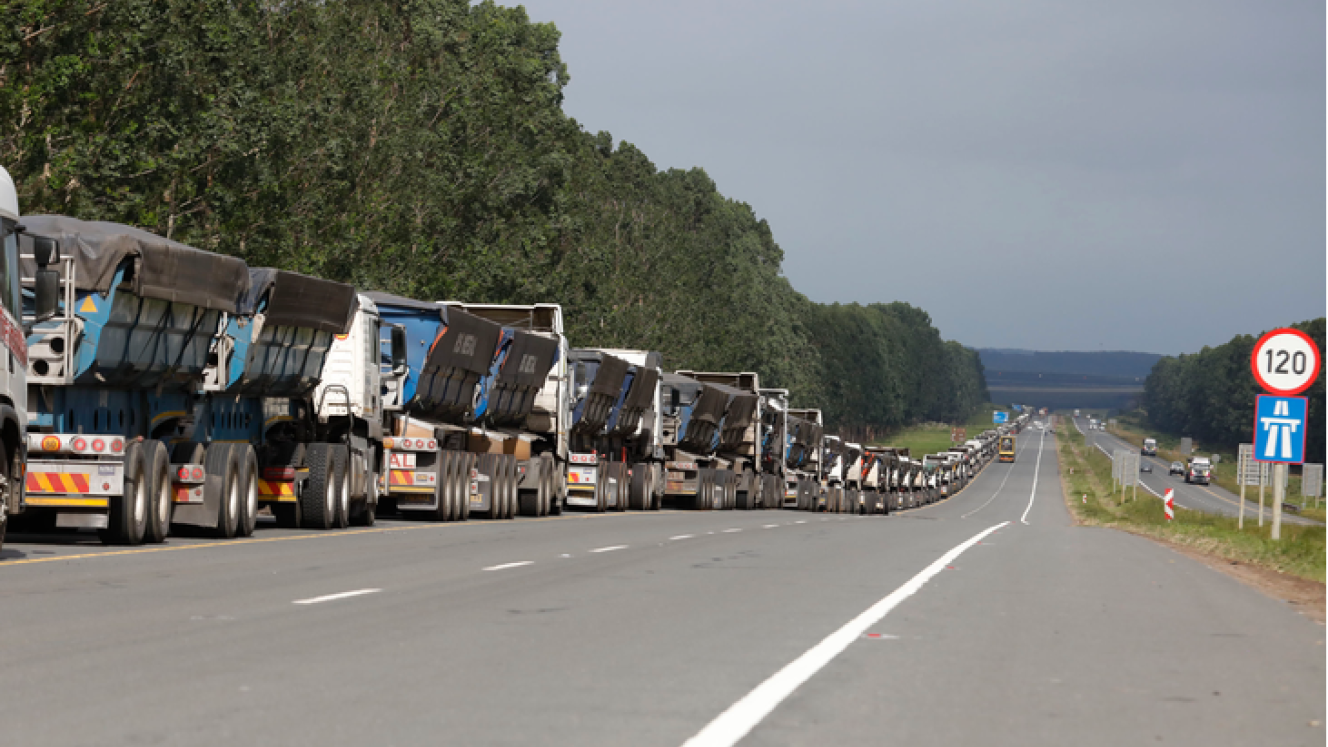
A generally rosy prospect of economic growth in South Africa and across the rest of the continent is clouded by some significant risks, warns the United Nations World Economic Situation and Prospects 2014 (WESP). Internal and external risks which could affect the flow of cargo in and out of the continent include a global economic slowdown, and changes in commodity prices and terms of trade. South Africa is included on the UN’s risk watch list. “Political, civil and labour unrest still pose a significant threat to economic activity in several African countries, including Central African Republic, the Congo, Democratic Republic of the Congo, Egypt, Libya, Mali, Somalia, South Africa, South Sudan and Tunisia. “In addition, with many African economies relying on agriculture, weatherrelated shocks represent a key downside risk for economic growth and upside risk for agricultural prices,” says the report. It estimates that gross domestic product in Africa averaged 4% in 2013. Economic growth in Africa is projected to accelerate to 4.7% in 2014 and 5% in 2015. This growth is expected to be supported by improvements in the global economic and regional business environment, relatively high commodity prices, easing infrastructural constraints, and increasing trade and investment ties with emerging economies. Not all the growth in freight volumes will be export and import related. More consumer goods and foodstuffs should be moving inside countries. “Other important factors for Africa’s medium-term growth prospects include increasing domestic demand—especially from a growing class of new consumers associated with urbanisation and rising incomes – and improvements in economic governance and management,” says the report. Inflation across Africa is expected to decelerate slightly from an average of 8% in 2013 to 7.8% in 2014. The fastestgrowing region is West Africa, with GDP expected to increase from 6.7% in 2013 to 6.9% in 2014. “West Africa will continue to attract investments in the oil and minerals sector, a key source of growth in the subregion, especially in countries such as Burkina Faso, Ghana, Guinea, Liberia, Niger, Nigeria and Sierra Leone,” says the report. Next strongest is East Africa, where GDP growth is expected to increase from 6% in 2013 to 6.4% in 2014. It will be supported by increased consumer spending in Kenya; increased consumption and investment in the natural gas sector in Tanzania; growth in construction, transport, telecommunications, financial services, exploration and construction in the burgeoning oil industry in Uganda; and improved agricultural and service sector growth spearheaded by the wholesale and retail trade sector performance in Ethiopia. Growth is projected to increase from 3.6% in 2013 to 4.2% in 2014 in southern Africa, driven largely by projected increases in South Africa’s growth rate from 2.7% in 2013 to 3.3%t in 2014, declining labour market unrest, increased investments, and rising mineral output. Expect more demand for project cargo services in the region. “Southern Africa is likely to attract increased foreign investment thanks to huge coal deposits and offshore gas discoveries in Mozambique, increased oil output in Angola, and the increased investment in the copper sector in Zambia and uranium mining in Namibia,” says the report. While political instability and disruptions in oil output “continue to weaken growth prospects in North Africa, especially in Egypt, Libya and Tunisia,” the region will grow at the same rate as southern Africa – 3.3%. This is below the 4.8% expected for the troubled Central African region where GDP growth dipped to 4.2% in 2013. INSERT Political, civil and labour unrest still pose a significant threat to economic activity in several African countries, including South Africa.
Significant risks cloud Africa's growth prospects
Comments | 0
© Now Media. This content is protected by copyright and may not be adapted or republished. If you would like to discuss cooperation opportunities, please contact: editor@freightnews.co.za.