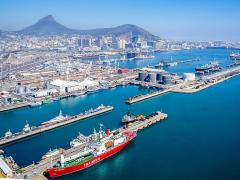
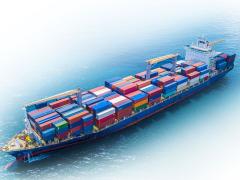
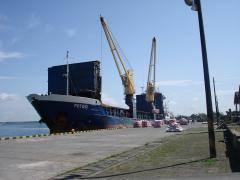
Reduced transit times and greater efficiencies along the Walvis Bay Corridors have helped increase volumes on all of the routes over the past year, according to Walvis Bay Corridor Group (WBCG) business development officer Agnetha Mouton. “The Walvis Bay Corridors experienced significant growth. Along the TransKalahari Corridor (TKC) volumes increased by 115% to the end of August 2012 compared to the previous year. Along the Walvis Bay-Ndola- Lubumbashi Development Corridor (WBNLDC) volumes increased by 75%; and along the Trans Cunene Corridor (TcuC) they were up 29%,” she told FTW. Transit times are now around 48 hours between Walvis Bay and Gauteng (through Botswana); three to four days between Walvis Bay and Lusaka; and five to six days between the port and Lubumbashi. Walvis Bay to Angola is around seven days. Border crossings are speeding up thanks to the work of two corridor management organisations, the TransKalahari Corridor Secretariat and the Walvis Bay-Ndola-Lubumbashi Development Corridor Secretariat. The organisations oversee the development and implementation of seamless cross-border facilitation measures along the TKC and WBNLDC respectively, she said. “Stakeholders from the countries which these corridors traverse hold regular meetings to track the progress of action points that need to be addressed and fast-tracked in order to ensure smooth and speedy border crossings,” she added. Increasing volumes are creating opportunities for back of port operations and value-added logistics, believes the WBCG. “Our focus is to increase logistics service providers by attracting them to carry out their services in Walvis Bay in order to increase capacity along the Walvis Bay Corridors,” says Mouton. CAPTION The Port of Walvis Bay ... significant volume growth on all corridors.
Shorter transit times push up volumes on Walvis Bay corridors
Comments | 0
© Now Media. This content is protected by copyright and may not be adapted or republished. If you would like to discuss cooperation opportunities, please contact: editor@freightnews.co.za.