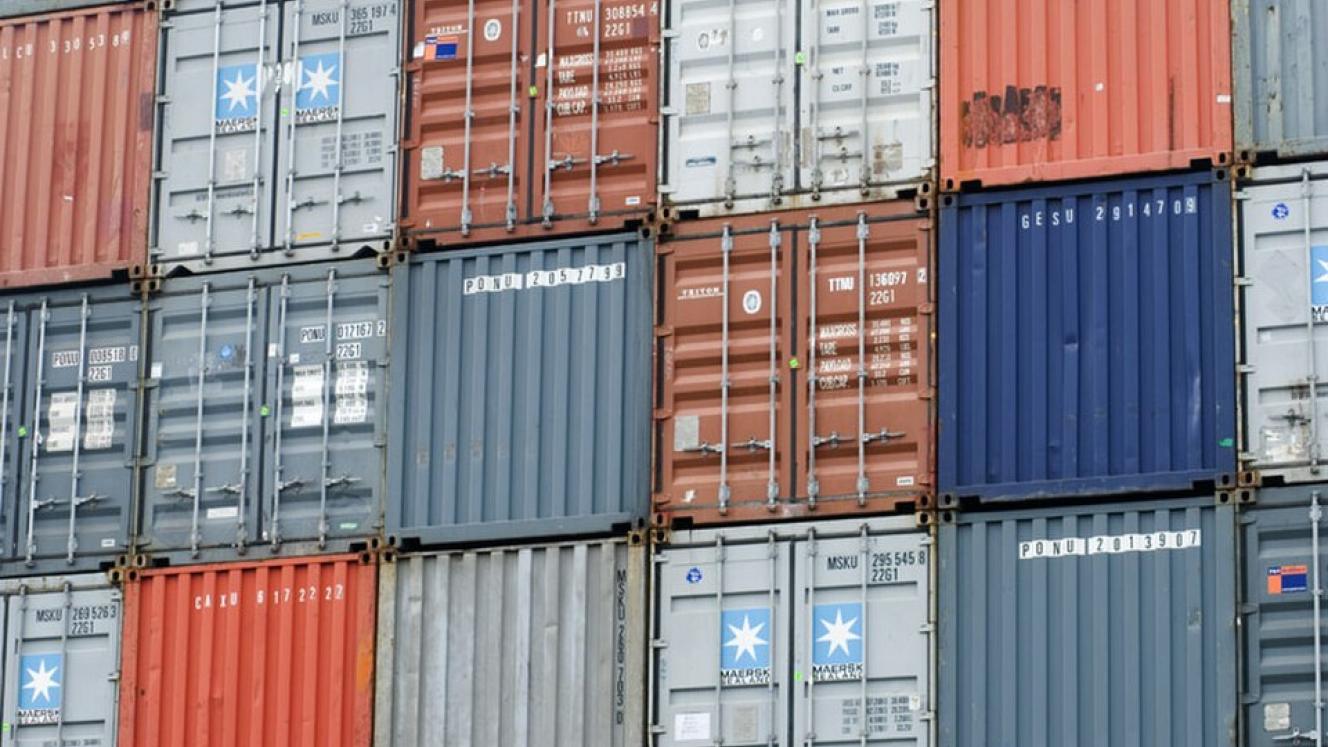
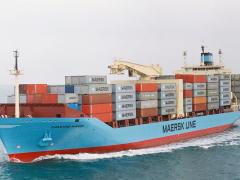
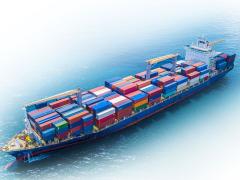
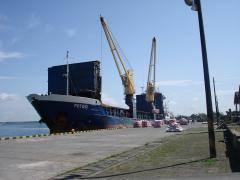
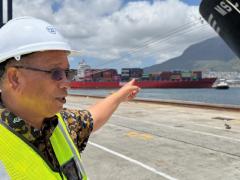
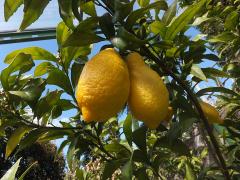
Removing the myth and mystery from carbon footprint evaluation was the motivation behind a carbon project undertaken by fruit exporter Colors in conjunction with Safmarine and other stakeholders. The purpose was to determine the impact on the environment of the movement of fresh fruit from South Africa to the UK so that the company could take the necessary steps to reduce that impact. And the results were an eye-opener, says Safmarine’s customer service executive: Africa region, Russell Gillespie. “The report revealed that fruit produced in one country under greenhouse conditions and transported by truck to a local supermarket a few hundred kilometres away could have a far higher carbon footprint than fruit grown in natural sunlight and shipped from a country thousands of kilometres away,” Gillespie told FTW. “The carbon footprint issue includes production methods, packaging and the total logistics and transportation chain.” The Colors project considered the life-cycle of fruit (including grapes, citrus, stone fruit and top fruit) from methods of farming in South Africa to delivery in the UK, taking into consideration the contribution of packaging, energy use, transportation and many other factors. “From a Safmarine point of view, we were particularly interested in the contribution of the shipping leg, and were surprised to see that the ‘per unit’ contribution was lower than expected,” said Gillespie. ”In general, packing and production contributed more to the carbon footprint than the entire long-distance shipping leg. For example, in the case of apples and pears, the results show that shipping accounts for less than 15% of the total emissions across the supply chain, while the production and packing phases account for 22% and 47% respectively.” And according to David Farrell, director: group strategy for Colors Fruit Holdings, the project has achieved the desired credibility. “Now that we have completed Phase 1 – and know what the carbon footprint is of a unit of fruit – we can focus on reducing that footprint and doing so in partnership with the various stakeholders in the supply chain. ”Our aim is to systematically reduce the embodied emissions of our fruit over time. Our preferred option is not to spend money on buying carbon credits to off-set our emissions, but rather to invest in emissions reduction interventions that can achieve a real and substantial improvement.” The company is, for example, investigating energy management system options (to achieve greater energy efficiency) and alternative energy options (to displace Eskom power) for its pack-houses. A similar investigation is being undertaken to identify the interventions and technologies that can be applied to reduce farm-level emissions. “We believe that by finding more environmentally-friendly solutions we could ultimately help save not only the environment, but also reduce costs.”
Shipping accounts for less than 15% of total emissions
Comments | 0
© Now Media. This content is protected by copyright and may not be adapted or republished. If you would like to discuss cooperation opportunities, please contact: editor@freightnews.co.za.