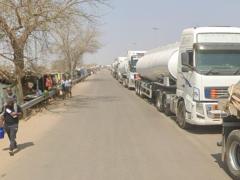
Heavy vehicle operators are increasingly adopting selfregulation – via the Road Transport Management System (RTMS) – as a way to cut down on accidents, with notable successes. “This year, to date, 146 fleets representing almost 8 000 vehicles have been certified by RTMS, compared to 74 fleets in 2007,” said Paul Nordengen, research group leader of asset management systems for the Council for Scientific and Industrial Research (CSIR). This figure includes 24 abnormal operators. Speaking at this month’s Special Interest Group (SIG) Transport Forum in Johannesburg, he commented that a growing culture of noncompliance, coupled with a lack of road traffic enforcement was largely contributing to major road freight accidents and infrastructure issues. He pointed out that there were three main safety and compliance areas around road freight that needed to be addressed – drivers, vehicles and infrastructure – noting that vehicle overloading was currently one of the biggest contributors to a high accident rate as well as a major deterioration of the roads. “A recent Organisation for Economic Co-operation and Development (OECD) freight movement report showed that South Africa was well above the global heavy vehicle fatality crash rate with an average of 10 fatalities per 100 million kilometres travelled,” said Nordengen. He believes RTMS and the new consignee/consignor legislation which came into effect on January 31 this year are two key ways in which the ongoing road freight challenges can be addressed. “The consignee/ consignor legislation is not perfect and, since it is quite new, we still need to see how effective it really is in practice. However, as an industry we need to make it work and come up with ways to improve the legislation if necessary,” Nordengen said. He mentioned two industries – forestry and sugar – where consignees and consignors had taken responsibility for ensuring compliance with the vehicle overloading regulations and had managed to cut down “significantly” on vehicle accidents. “The timber logistics services saw a 50% reduction in crashes and incidents from 2009 to 2012,” said Nordengen. Furthermore, since the adoption of RTMS, logistics companies have seen revenue improvement due to a reduction in accidents. Unitrans Amatikulu saw the cost of its crashes reduced from 5.0% of revenue to 1.3% of revenue (reduction in the frequency and severity of crashes) and Barloworld Logistics saw a 66% reduction in the number of crashes when it became RTMS certified in 2012, he added. INSERT 10 Fatalities in South Africa per 100 million km. INSERT & CAPTION This year to date, 146 fleets representing almost 8 000 vehicles have been certified by RTMS. – Paul Nordengen
Self regulation helps slash vehicle accidents
Comments | 0
© Now Media. This content is protected by copyright and may not be adapted or republished. If you would like to discuss cooperation opportunities, please contact: editor@freightnews.co.za.