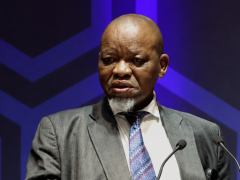
Second-hand car dumping by countries like Japan, the US and Canada is holding back African countries from establishing the same kind of automotive capacity that has made South Africa’s car manufacturing industry a leading exporter and GDP contributor. Speaking at the Manufacturing Indaba in Sandton last week, industry executive Thomas Schaefer emphasised the significant contribution cars manufactured in Uitenhage were making to the local economy – 100 000 engines and 160 000 fully assembled vehicles of which 70% are exported internationally. Breaking figures down even further, the MD and chairman of Volkswagen Group SA said automotive production contributed 30% to the country’s entire manufacturing output, translating into 7% of GDP. “Unfortunately this is not the case for the rest of Africa where you have to compete with used car traders. “They literally get their cars from countries like Japan for Africa’s east coast and from the US and Canada for countries out west, ship them to the continent for about $500 and sell them for around $20 000 a car cash. “It’s very good business and you can’t compete with it.” He said it was making a few individuals rich but “not doing anything for job creation”, adding that South Africa had one million people in the automotive value chain. Additional issues he identified as impeding automotive manufacturing developments across Africa were bad fuel, affordability and the costs of infrastructure and logistics. On the topic of fuel he said: “If you think the quality is bad in South Africa you don’t want to see what it’s like in the rest of Africa. The level of manganese and sulphur content is too high because some of these countries don’t refine it.” As for affordability, with companies like VW coming up against intrepid informal auto-traders, Schaefer said it was quite possible for hire-purchase initiatives with attendant benefits like residual value and asset-based finance to be rolled out elsewhere in Africa. “But it’s going to take political will.” By way of illustration Schaefer mentioned how in Kenya recently high-level political intervention had led to substantial reduction in toxic fuel emissions. Another example is the direct presidential involvement of Rwandan leader Paul Kagame who, together with his trade attachés, engineered a seven-year tax break and other initiatives that paved the way for VW to invest in Kigali. At the time the RwandaVW partnership was announced, and with clear reference to the dominant position of the used-car market, Kagame said: “Africa does not have to be a dumping ground for second-hand cars or second-hand anything.” Schaefer stressed that even the solution-seeking impetus Rwanda had given to the problem of financing, rolling out a progressive public mobility project whereby cars were eventually put up for sale, showed what could be achieved through political will. “That’s why we’re working with certain countries in Africa. Ghana, Kenya, Ethiopia and Rwanda are all saying they believe in what can be done, that they want to change the status quo and that they want the resulting valueaddition of industrial investment in their countries.”
Ghana, Kenya, Ethiopia and Rwanda are saying they believe in what can be done. – Thomas Schaefer