South Africa’s total logistics
bill for 2016 is forecast
to grow by 6.3% in 2016
to 11.8% of total gross
domestic product.
This was revealed last
week at the release of
the second edition of the
South African Logistics
Barometer, published by the
University of Stellenbosch’s
Department of Logistics.
The barometer, which
continues the macrologistics
research work published
in the CSIR State of
Logistics Survey that was
discontinued in 2014, this
year again highlighted
the ongoing trend of
increasing logistics costs
– a phenomenon that the
country can
ill afford.
“South
Africa’s
logistics
costs totalled
R429 billion
in 2014 and
equated to
11.2% of GDP
or 51.5% of
transportable
GDP,” said
Professor Jan
Havenga of
the University
of Stellenbosch. “Logistics
costs increased by 9.2%
between 2013 and 2014,
after showing modest
growth of only 3.5% in
the previous
period. It is
estimated to
have grown by
9.5% during
2015 and
is forecast
to grow by
6.3% in
2016, in line
with current
inf lation
estimates.”
He said
transport
costs
remained the dominant
contributing factor to
logistics costs – amounting
to 57% of the total in 2014
followed by inventory
carrying costs (15.2%),
warehousing 14.6%)
and management and
administration costs at
13.5%.
“The contribution of
transport costs to total
logistics costs is expected
to decline to 55% in 2016,
mainly due to lower fuel
prices. This is the lowest
level it has reached since
2010.”
Havenga said while
transport was still the
biggest contributing factor –
even though it was declining
– the trade-off was that
inventory carrying costs
had increased by 21.8%
between 2013 and 2014.
The increase in the prime
interest rate from 9.0% at
the start of 2014 to 9.25%
at year-end, compared to
8.5% in 2013, contributed
to the higher inventory
carrying costs, but external
factors such as economic
uncertainty and a volatile
currency led to increased
inventory levels and it is
being forecast to have the
same effect in 2016.
“On the back of these
higher inventory levels,
warehousing costs (which
include storage and
handling costs) increased
by 12.1% between 2013
and 2014, following on
nominal growth the
previous two years, and
are estimated to have
grown above inf lation in
2015.”
Havenga said while
it was not all bad news,
serious concerns existed
around the ongoing
increase in logistics costs.
“The positive news is
that we have a tool with
which we can measure
national logistics
performance. Not many
countries have this and
many countries admire
ours. Because of this,
we’ve extended our work
to other sub-Saharan
countries and most
recently to India,” said
Havenga. “Unfortunately,
research shows that after
improving for many years,
the relationship between
national logistics costs and
the GDP has been moving
in the wrong direction for
the past five to six years.”
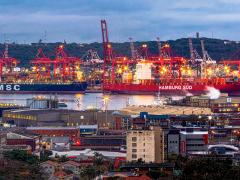
INSERT & CAPTION
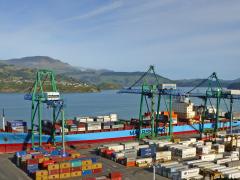
Transport costs
remain the dominant
contributing factor
to logistics costs —
amounting to 57% of
the total.
– Dr Jan Havenga
SA’s logistics costs keep climbing
Comments | 0
© Now Media. This content is protected by copyright and may not be adapted or republished. If you would like to discuss cooperation opportunities, please contact: editor@freightnews.co.za.