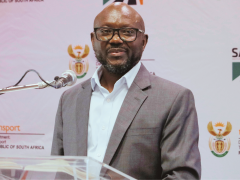
South Africa is roping in the big guns in an effort to prevent the International Maritime Organisation from striking it off the "white list" of countries compliant with the amended 1978 STCW Convention. The STCW or International Convention on Standards of Training, Certification and Watchkeeping for Seafarers sets minimum qualification standards for masters, officers and watch personnel on seagoing merchant ships and large yachts. According to Sobantu Tilayi,
acting chief executive officer of the South African Maritime Safety Authority (Samsa), the organisation has been in discussion with the IMO over this issue since 2013. Because it is still not compliant it has enlisted the services of the consultants that undertook the initial audits to determine countries’ compliancy criteria. Should South Africa be struck off the IMO list all South African-flagged vessels and more than 5000 locally trained international seafarers will be unable to work in international shipping. “Let us not mince our words,” said Tilayi. “If that happens it will be extremely serious.” This was reiterated by Rob Whitehead, president of the Society of Master Mariners South Africa, who welcomed the move to bring on board international consultants.
“This is a very complex issue and requires expertise,” he said, indicating that the services of such a consultant would go a long way towards ensuring accreditation. He told FTW that South Africa had for a number of years seen a decline in the infrastructure that supported shipping in the country – particularly in education – and the present problem had been looming. “The IMO announcement that we will be scrapped from the list if we do not comply was unexpected, but it must be said that we are in good company with some of the world’s biggest seafaring nations.” The list of more than 80 countries includes the Philippines, possibly the country that supplies most of the world’s seafarers, as well
as the United Kingdom, the Netherlands, Belgium, Panama and New Zealand. According to Tilayi, following a conference in 2010 in Manila, countries were required to submit reports once they had reviewed their systems on how they were giving effect to the STCW in general as well as the amendments that had been made. South Africa submitted its report in 2013 but it was rejected. A revised report was sent to the IMO in 2014 only to be rejected again, and finally a third report in 2016. “The IMO has had three challenges with the South African report,” said Tilayi. “This was in terms of our recognising prior learning in the industry and our quality management system. They have
also indicated that we must do an independent evaluation.” Tilayi said enough time had been allocated to complete this project by March 2020, well ahead of its next audit by the IMO in 2022. But it will now have to speed up the process – hence the decision to call in the very consultants that assisted the IMO. “It is clear that we need to do things differently,” he said. Whitehead said the issue was being prioritised not only by Samsa but the maritime community in general due to the dire consequences if South Africa was struck off the list. He said this was a “wake-up call” not just for South Africa but maritime trade in general. “The impact on shipping will be massive if these countries are taken off that list. The impact of Philippine-trained seafarers alone not being allowed to go to sea will be huge.” Whitehead maintained, however, that while the issue was extremely serious there were solutions available.
Enough time has been allocated to complete this project by March 2020, well ahead of the next audit by the IMO in 2022. – Sobantu Tilayi