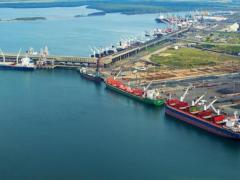
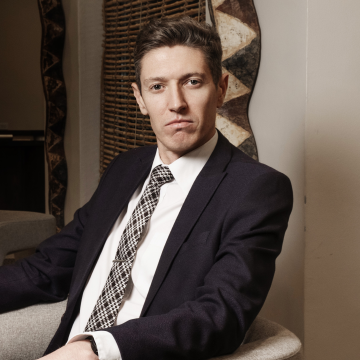
THE PORT of Saldanha has dismissed last week’s publicly aired report that it’s one of the world’s most dangerous and most expensive ports. “It’s safe for now and engaged in a substantial upgrade of all its operations, given pressing future demands,” Transnet National Ports Authority manager Eugene Kearns told FTW. As the West Coast port gears up to increase ore exports from the present 30 million tons to 45 million tons a year by 2010, Kearns expects the number of calling vessels to increase by 50%, to around 20 a month, over that period. He is dismissive of last week’s 'dangerous and expensive' claim by Andro Jacobs, operations manager for Oil Pollution Control, a state enterprise affiliated to the Central Energy Fund, and until recently the exclusive oil pollution service provider to the port. Oil Pollution Control says it withdrew its service after Transnet failed to enter into a service agreement, though talks are in the offing to remedy the situation. Quizzed by FTW, Jacobs stands absolutely by his claim but has not furnished proof, leading Kearns to conclude that he is not prepared to comment on that which remains unsubstantiated. “I don’t really know what we are talking about here. Is it dangerous from a maritime, a navigational point of view? From a safety perspective, however, there is no cause for concern.” Jacobs, on the other hand, insists: “Yes, it is a very dangerous port because it is open and the swell goes right in, whereas others are covered by a breakwater.” Kearns makes clear even if agreement is reached with Oil Pollution Control, Transnet is in the process of sourcing a handful of similar Western Cape companies to provide additional backup. “No single company in South Africa, ourselves included, would be able to deal with a major oil spill at Saldanha, and we wish to reduce this risk by engaging more companies. “Saldanha is becoming busier on all fronts and we realise we should not be reliant on a single service provider.” Jacobs rejects the suggestion that Oil Pollution Control, with equipment valued at R180 million, is unable to handle the responsibility on its own. As of now, the company has no other involvement in any South African port. Last year, TNPA Saldanha spent around R4 million upgrading its vessel traffic system (VTS), also implementing an automatic identification system, which supplies immediate vessel detail. Further upgrades of absorbent and non-absorbent pollution booms are also in progress. An environmental monitoring committee representing Langebaan residents and ratepayers has reported what it believes is a lack of adequate contingency planning on the part of the ports authority.
Saldanha denies ‘dirty and dangerous’ claim
Comments | 0
© Now Media. This content is protected by copyright and may not be adapted or republished. If you would like to discuss cooperation opportunities, please contact: editor@freightnews.co.za.