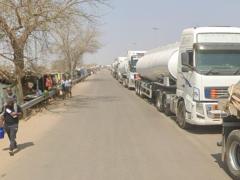
Unitrans, which has had a Zambian subsidiary since 2012, is helping to raise safety standards in the transportation of fuel in Zambia. Fuel transportation in the country is highly fragmented, with around 410 registered fuel transporters, according to ERB (Energy Regulation Board) statistics, says Pieter Bosman, regional director of Unitrans Zambia. Many of the vehicles are old and do not meet modern safety standards, according to Bosman. This adds a large element of risk to oil companies as they can be held liable in the event of a disaster. “Our approach to safety in fuel transportation,” says Bosman, “falls in line with our company policies regarding Safety, Health and Environmental Quality (SHEQ). “The implementation of the highest world-class standards regarding the safe transport of fuel and other hazardous goods is nonnegotiable at Unitrans.” Bosman adds that risk management is only one element of what is an entire company philosophy around SHEQ. Because all fuel in Zambia is imported, and is then distributed locally by private operators, Unitrans Zambia has the advantage of being able to draw on systems and the modern fleet being used in South Africa and the SADC region. It also has the advantage of having a tried and tested SHEQ philosophy regarding fuel transportation which it can put in place along with other management controls to ensure the efficient, effective and safe transport of fuel in the country, he says. “As a locally registered company we are prepared to share our knowledge, experience and approach to SHEQ with the market,” Bosman adds. Unitrans has two depots in Zambia – in Kitwe and Lusaka. It is also involved in the transport of bulk cement and provides local support to Unitrans and KAP Industrial operations in the region. Unitrans is a wholly-owned subsidiary of JSE-listed KAP Industrial.
Safe transport of fuel a top priority
Comments | 0
© Now Media. This content is protected by copyright and may not be adapted or republished. If you would like to discuss cooperation opportunities, please contact: editor@freightnews.co.za.