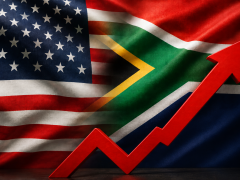
Southern African
Development
Community (SADC)
countries are
presenting investors with a
range of opportunities – both
in the recovering mining and
agricultural sectors as well
as anticipated sale of state
owned enterprises as some
governments seek to shed fiscal
burdens.
Deloitte Africa Services
Group associate director
Hannah Edinger said that
while SADC economies faced
idiosyncratic opportunities
and challenges, some emerging
trends were fairly consistent
across the community.
“The most distinct pertains
to the agricultural sector, which
is recovering from a regional
drought that proved to be
one of the worst on record.
The sector presents a driving
force of economic expansion.
Bumper crops are set to provide
opportunities in agri and
agro-processing. An additional
sector benefiting from a
recovery is the mining sector,”
Edinger said.
“While still a far cry from
the hey day of the super-cycle,
international commodity
prices have firmed of late. This
has seen mining production
ramp up in several countries,
notably in South Africa and
Namibia.”
The mining sectors in these
countries have grown by 6.9%
and 16.8%, respectively, year
on year, in the first quarter of
2017 but the sector contracted
5.2 % in Zambia and 29% in
Botswana.
Edinger said a large share
of African economies had
faced a ‘repricing’ in the wake
of the oil price slump in recent
years as well as the end of the
commodity super-cycle.
“The most visible repricing
has been in exchange rates,
with currencies depreciating
rapidly as export revenues
slid, creating shortages of
foreign exchange. This has seen
governments turn to tighter
foreign exchange regulation in
an attempt to shore up reserves.
Access to forex and repatriating
profits from countries like
Nigeria, Angola and Ethiopia
has become a primary
impediment to doing business
for international companies,”
Edinger said.
Many
countries were
being forced
to embark on
long overdue
sales of SOEs in
order to shore
up balance
sheets, which
were under
increasing
fiscal pressure
from reduced
export earnings
and currency
depreciation.
“While many African
governments have been
particularly resistant to
privatisation, the combination
of rising external debt, along
with interest payments and
weak currencies may force
them to sell off assets such as
utilities and infrastructure,”
Edinger said.
“Mozambique
looks likely to
be one such
example, with
the government
announcing in
the latter part
of 2016 that
it expected to
sell, or close,
up to 40
state-owned
companies.
This is viewed
as a progressive
move for the economy
and provides numerous
opportunities for firms looking
to expand into the country,”
Edinger said.
INSERT & CAPTION
South African
multi-national
conglomerates have
expanded across the
SADC region.
– Hannah Edinger
SADC woos investors with attractive value proposition
Comments | 0
© Now Media. This content is protected by copyright and may not be adapted or republished. If you would like to discuss cooperation opportunities, please contact: editor@freightnews.co.za.