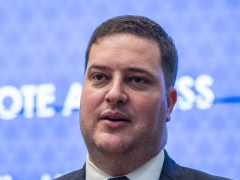
While most vessels may be adequately insured, the consequences of an uninsured vessel could be enormous – and the South African coast remains highly vulnerable, warned Malcolm Hartwell, director of Norton Rose South Africa. Speaking at the Marine Insurance Risk and Safety Africa Conference in Cape Town recently, he said the costs involved in clean-ups, wreck removal or even just towage of a damaged vessel usually ran into millions of rands. “Be it a collision or a vessel that runs aground – if that vessel is uninsured the costs involved will fall to the South African tax-payer.” He said while most vessels were adequately insured since insurance premiums were low in comparison to the potential liability shipowners faced, the movement of vessels being taken to scrap yards had increased in recent years and South Africa, thanks to its location, was seeing more and more of this traffic. “And it is these vessels that pose the greatest risk as they are often not ensured optimally or the costs of the salvage operation are so high that the owners and the insurers just walk away, leaving the country in question to deal with the issue and the cost,” he said. This was proved when the Phoenix ran aground near Ballito along the country’s north coast in 2011, said Hartwell. “The bulk carrier was on its way to a scrapyard in India when the tug towing it requested assistance. For reasons unknown the harbour master refused it entry into the port. It was hit by gale force winds, the tow line broke and it ran aground,” said Hartwell, whose company at the time represented the Department of Transport. What followed was near catastrophe on one of South Africa’s top beaches. Not only did the South African Maritime Safety Authority have to step in and remove tons and tons of fuel from the vessel, it was ultimately responsible for sinking the ship some 50km off the KwaZulu- Natal coast. “The owner had disappeared and there was no insurance of any kind that could be found. So the people left to deal with this and pay for it were the Department of Transport, Samsa and the Department of Environmental Affairs. At the time we got a quote for the removal of the wreck and it was around $40 million – in the end the entire operation after it was towed off and sunk by a local company came to around $4 million.” Hartwell said this proved the importance of adequate insurance not just for shipowners but also for countries which needed to make sure they had the correct legislation in place to deal with these costly incidents rather than adding them to the already overburdened fiscus. CAPTION Malcolm Hartwell … ‘If a vessel is uninsured the costs involved will fall to the South African tax-payer.’
SA coast highly vulnerable to uninsured vessels
Comments | 0
© Now Media. This content is protected by copyright and may not be adapted or republished. If you would like to discuss cooperation opportunities, please contact: editor@freightnews.co.za.