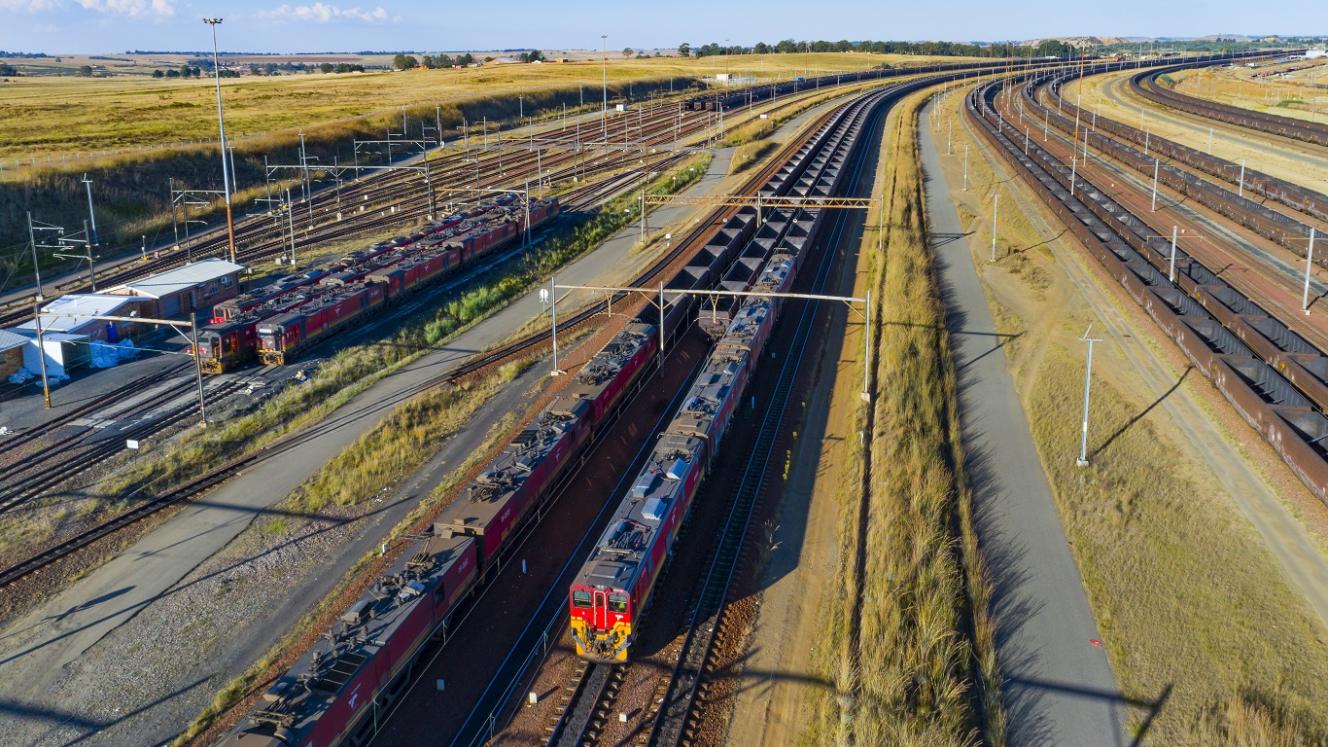
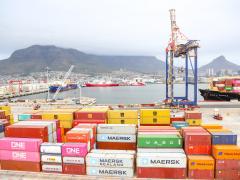
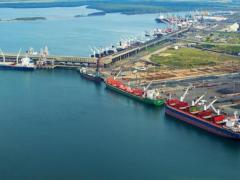
For two decades one of the buzz phrases in the SA freight and road transport industries has been “regional development corridors (RDCs)” – mentioned with its sister concept “spatial development initiatives (SDIs)”. The two ideas sprang up alongside each other in the early ‘90s – designed to address SA’s transition from the inward-looking import-substitution economy it had become during the apartheid years. The idea was to focus exportoriented industrial development in areas close to or along the coast, to maximise on transport efficiencies and position the country to compete in global markets. But it soon gained popularity around the whole Southern African sub-continent, and more than 20 areas of the region were considered as being potential RDCs or SDI. The concepts developed a whole host of grand-sounding words supporting them, all of which promised better times for the economic future of the selected regions. The concept was first put into practice in the Southern African Development Community (SADC), where – for the purpose of linking transport more closely to general economic development – the member countries initiated a regional SDI programme. The Common Market of East and Southern Africa (Comesa) soon followed suit, fully embracing the strategy. Finally, the African Union (AU) accepted the strategy for the rest of Africa. In the meantime, conversations around the freight and road transport industries emphasised the idea that these development initiatives would lead to first-class highway systems being developed across the southern and eastern African regions – making crossborder transport in the region easy, high-speed and cost-efficient. That, at least, was the optimistic hope of the times. But, in the 20 years since then, where have all these transport and development corridors gone? Only in four of them has road development come anywhere near highway levels. These are the Northern and Tazara Corridors in the northern section – where foreign aid and expertise has been applied. For the Northern Corridor, for example, USAID together with the New Partnership for Africa’s Development (Nepad) and Comesa supported a “High Level Workshop on the Northern Corridor Spatial Development Programme” in Kampala in 2008. The corridor transport route starts in the Kenyan port city of Mombasa, going through Nairobi and into Uganda. There it is intended to split into two legs, the first running through Kampala and into Rwanda, Burundi and DRC, the second running to Gulu, and then splitting again going into northeastern DRC and to the southern Sudanese city of Juba. But it’s done little up to now except develop the road between Mombasa and Uganda. For the Maputo and Trans- Kalahari Corridors in the southern region, there has been intergovernment co-operation between the SA and Mozambique authorities in the first case, and between SA, Namibia and Botswana in the second. But it’s only in two of the four corridors that there has been any really significant “spatial development”. And, in the first – the Walvis Bay or Trans-Kalahari Corridor – this development has been largely confined to the region in and around the Namibian port city of Walvis Bay itself. But in the second – the Maputo Corridor – there has actually been highway development (in the form of the new N4) and it has proved to be the only area where a true SDI has been implemented at the regional level. It involved a partnership between Mozambique and SA – and, at the time, this represented an unprecedented level of economic co-operation between the two countries. It was first conceptualised as a transport corridor by the transport departments of the two governments, but the eventual intervention of SA’s Department of Trade and Industry turned it into the first of the regional SDI initiatives. Overall it has been viewed as a success, and a demonstration of the potential of transport corridors and SDIs in Africa. The corridor links SA’s most industrialised, but effectively landlocked northern and eastern regions (Gauteng and Mpumalanga provinces) to the Mozambican port of Maputo, and centres on a system of road, rail, border posts, port and terminal facilities. But, with the exception of the MDC, SDIs in Africa have not been able to translate transport infrastructure development into broad-based growth – and not even too much road development has been activated. So the Southern African “highway network” still remains only a dream.
Regional corridor concept falls short of expectation
Comments | 0
© Now Media. This content is protected by copyright and may not be adapted or republished. If you would like to discuss cooperation opportunities, please contact: editor@freightnews.co.za.