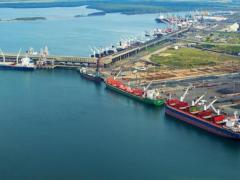
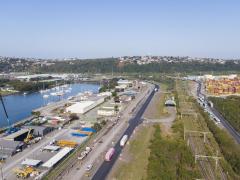
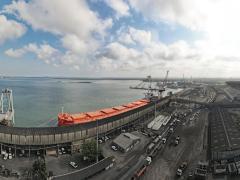
THE AFRICAN Union took a significant step forward in its efforts to address regional logistics challenges when ministers responsible for maritime transport committed to the Abuja Maritime Declaration at a conference held in Abuja, Nigeria in February this year. They effectively gave a collective undertaking to prioritise transport infrastructure projects that promote intra-African and African trade and facilitate access to sea for land-locked countries. Efficient ports reduce the cost of trade and the cost of poor port efficiency and delays is severe, as the analysis in the table below right illustrates. The ministers also agreed to create conducive conditions for national and foreign private sector investments such as concessioning, PPPs and BOT (Build, Operate, Transfer) arrangements to promote competitiveness and efficiency. Maritime safety and compliance with international security requirements were also part of the agenda. Current statistics illustrate the extent to which high freight costs and customs delays reduce Africa’s trade competitiveness, a point that Department of Public Enterprises' Andrew Shaw drove home at the recent Intermodal Africa 2007 conference in Durban. With Sub-Saharan African container traffic expected to grow 9.8% from 2004-2010 and 8% from 2010-2015, ensuring that port development keeps pace with growth is crucial if the continent is to achieve its share of expected sustained global economic growth.
Regional agreement on port efficiency sends the right message
Comments | 0
© Now Media. This content is protected by copyright and may not be adapted or republished. If you would like to discuss cooperation opportunities, please contact: editor@freightnews.co.za.