South Africa's structural reforms under Operation Vulindlela (OV) are delivering partial progress in supporting economic recovery, but advances remain slow and uneven, particularly in the logistics sector.
This is according to the inaugural Reform Barometer published by the Impumelelo Economic Growth Lab at the Bureau for Economic Research (BER) on Wednesday.
The new barometer evaluates whether OV – the government's flagship programme to accelerate structural reforms and unlock growth and investment – is translating into measurable economic improvements.
Real GDP growth doubled from 0.5% in 2024 to 1.1% in 2025, the strongest annual increase since 2022. The report attributes this primarily to robust household consumption, which rose for seven consecutive quarters until 2025Q4.
Growth reached 0.4% quarter-on-quarter in the same quarter, the fifth straight quarter of expansion. The services sectors led the recovery, while manufacturing, mining, and electricity production continued to drag on output.
Investment showed early signs of turning.
"Fixed investment improved for a second consecutive quarter following a bleak streak since mid-2023, expanding 1.3% quarter-on-quarter (q-o-q) following a 1.4% rise in Q3,” the barometer found.
Private business investment accelerated to 2.4% q-o-q in Q4.
Business confidence improved markedly, with the RMB/BER Business Confidence Index reaching 47 in 2026Q, its highest level since 2015 outside the post-pandemic rebound, and six points above its long-term average.
According to the barometer, sectoral assessments varied.
The electricity sector was described as “positive” but with “risks emerging”. Private renewable generation surged to around 18 GW by 2025, attracting R361 billion in investment. President Cyril Ramaphosa's reaffirmation of Eskom unbundling “restores reform credibility”, while a new World Bank credit guarantee facility supported transmission expansion, it noted.
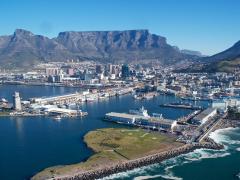
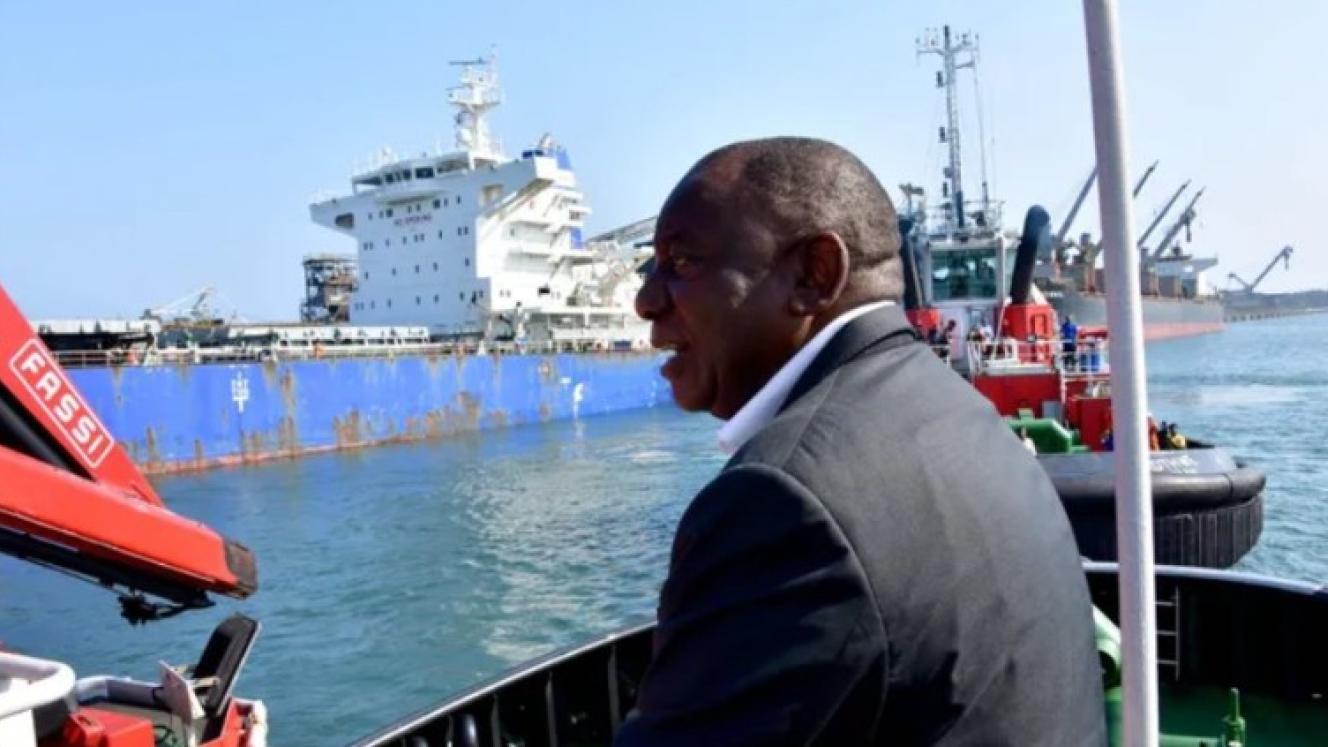
Logistics was rated as “positive, but uneven’. Rail and port throughput rose in 2025, but Cape Town Container Terminal delays inflicted direct losses exceeding R350 million on the fruit industry in the 2025/26 season, straining exporters and rural economies.
Water has achieved "slow progress". Faster Water Use Licence approvals support investment, yet the barometer found Blue and Green Drop results showed widespread municipal water deterioration.
The barometer noted that record tourist arrivals were driven mainly by regional and African travel, with "limited gains from visa reforms" and declines from China and India, scoring this sector a “neutral” rating.
Local government achieved a "slow progress” rating due to several factors. These included an advance in metro trading services reforms that was dampened by persistent "municipal fiscal strain” marked by weak revenue collection and negative cash positions.
Spatial integration was rated “neutral”. A backlog of approximately 1.2 million title deeds hinders property formalisation, although passenger rail journeys are recovering steadily.
On digital public infrastructure OV scored a "strongly positive” rating after Gov.za achieved nationwide zero-rating – this allows citizens to access official government information and services without incurring mobile data costs – and the South African Reserve Bank acquired a 50% stake in PayInc.
"In summary, there has been some progress, particularly in reforming regulatory and legal frameworks. However, the report reveals emerging issues, such as the slow pace of water-sector implementation and ongoing municipal financial distress, which expose the gap between policy design and operational outcomes,” the barometer noted.
“The effectiveness of the reform agenda will be judged not by policy commitments but by whether reforms translate into sustained investment, improved infrastructure performance, and faster economic growth,” it said.
The BER plans to publish regular updates as it monitors implementation and outcomes.