Consolidators need to
be aware that they
could potentially
be held responsible
for the verified gross mass
(VGM) of a container when the
International Convention for
the Safety of Life at Sea (Solas)
container weighing regulations
become effective on July 1 this
year.
The World Shipping Council
(WCO) points out in a 12-page
document – released in
December last year – that the
“shipper” ultimately carries
the responsibility for the VGM.
But the term “shipper” may
encompass a range of people
involved in the contracting,
packing and transportation
of cargo – and that includes
less-than-container load (LCL)
operators.
Tally Judge, marketing
manager for global risk
and maritime insurance
provider, TT Club, explains:
“The company that loads the
container is responsible, so
90% of the time that will be
the exporter/shipper – but
remember also that freight
forwarders load consolidation
boxes with LCL cargo from
multiple shippers so they will
be responsible for weighing the
loaded container and declaring
gross mass.”
South African Maritime
Safety Authority’s (Samsa)
Kirsty Goodwin told FTW that
deciding who was defined as
the “shipper” would depend on
the contractual arrangement
with the co-loading freight
forwarder and whoever entered
into the “contract of carriage”
with the carrier.
“However, responsibility for
providing the accurate VGM of
a co-loaded container remains
with the shipper named on
the maritime carrier’s bill of
lading, ie, the ‘master’ freight
forwarder,” she pointed out.
In other words, the shipper,
as stated on the bill of loading,
is responsible for providing the
VGM – regardless of who packs
the cargo.
According to Judge the risk
is that consolidators would then
often have to rely on others to
have “adequate and recognised
certified methods” by which to
provide the verified weight of a
container.
Apart from having a
sustainable method by which
gross mass is verified, the
shipper would also need to
communicate the weight in
advance of the preparation of
the vessel’s stow plan.
Judge added that the
information would be sent by
the shipper to the carrier but
pointed out that with joint
service arrangements, there
could be a number of carriers
involved, with one taking
responsibility to consolidate the
manifest information.
“It is wise therefore to review
contractual agreements ahead
of the legislation changing
and ensuring that risks are
minimised,” said Judge
INSERT & CAPTION
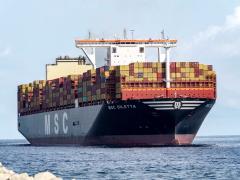
A non-vessel operating common carrier (NVOCC) could be held responsible for container
verified gross mass (VGM) certification. Photo: Maersk Group
Red flags for consolidators in new weighing regulations
Comments | 0
© Now Media. This content is protected by copyright and may not be adapted or republished. If you would like to discuss cooperation opportunities, please contact: editor@freightnews.co.za.