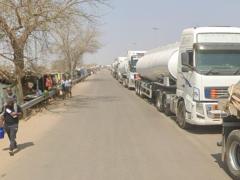
I HAVE a certificate and can transport dangerous cargo. That is the call drivers belonging to RailRoad Africa can make after completing what managing director Roland Naidoo describes as the most thorough training route possible. "We insist our drivers know the ropes when it comes to handling this type of commodity," he says. "We put them through the toughest courses and ensure they are in possession of a Haztrans certificate which covers hazardous transportation requirements, before going out on the road to handle business. Before they take the course they undergo a medical check to make certain they are capable of carrying this type of cargo, and then they are presented with the orange-coloured diamond plate to affix to their vehicles showing they are qualified to drive a vehicle carrying dangerous goods. "During the course they are taught to identify types of goods by their labels. They carry an ID card certifying their capabilities and renewable every year after full testing." A steel case accompanies the vehicle, carrying documents detailing the type of cargo being carried. This is to provide a safe definition of the type of cargo in the event of fire. But even with these documents under steel protection, every driver has to carry a fire extinguisher. "Some clients have special requirements which we must observe," says Naidoo. "For one of the chemical plants which we service, the drivers have to arrive equipped with hard hats, special gloves, goggles, overalls and safety shoes. Without them they are denied entry into the plant. "At our offices controllers dispatching the drivers are also required to complete a training course, familiarising them with the type of cargo they are arranging to be loaded. We even extend our safety to special types of vehicles to ensure nothing can go wrong along the route. You have to involve all of these measures when dealing with products of this nature."
RailRoad insists on stringent driver training
Comments | 0
© Now Media. This content is protected by copyright and may not be adapted or republished. If you would like to discuss cooperation opportunities, please contact: editor@freightnews.co.za.