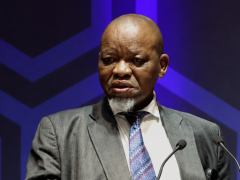
FTW: Rail is becoming a focus in southern Africa and interest is growing. Why is this? SG: I believe that connectivity between countries is imperative for regional growth and development – of the southern African region and of the African continent. Transportation is possibly the most vital element in building such connectivity – and rail transport has many advantages. It is a catalyst for development. Rail infrastructure expansion can be a significant contributor to economic stimulation. Rail is an enabler of economic growth, providing the logistics channels for the movement of goods. Rail facilitates trade growth by improving the competitiveness of South Africa and the southern African region. Greater tonnage of freight being transported over long distances is the most energyefficient and cost-effective mode of transport for large parcel sizes. The cost of logistics can thus be reduced by shifting rail-friendly freight from road to rail. Intermodal solutions in partnership with road hauliers and other alliance partners would further contribute to lowering logistics costs. More recently, the drive for more environmentally friendly utilisation of rail, growth in transport demand and the implementation of intermodal logistics solutions have started to mark a clear trend for the revival of rail. FTW: Why is it important that we revive southern African railways? SG: It is Transnet’s commitment to integrate South Africa with the rest of the continent. This is being done through the creation of competitive corridor supply chains that will integrate our ports and railways efficiently and globally. Transnet Freight Rail has successfully established three Joint Operating Centres (JOCs) on three corridors – the Maputo, North-South and East West Corridors – that will achieve a seamless flow of cargo between the different countries that are signatory to these JOCs. In the main these corridors will be developing competitive road to rail strategies that will increase intra-regional trade from 12% to a much higher percentage over the next 2-5 years. This includes developing aligned long-term railway and port investment plans to ensure that the planned volume growth and logistics businesses are synchronised with the required and necessary infrastructure investments. This will contribute to the reduction of the number of heavy trucks on roads while also reducing the overall transport and logistics costs. FTW: How important is it for the region to work together to achieve its goals? SG: By working together as railways and ports on the above corridors we not only facilitate intra-regional trade, but we provide the impetus for economic growth. The master plans that are being developed require all the partnering organisations to improve their transport systems together by: • Aligning and guiding theinfrastructure development needs and investments; • Ensuring that such infrastructure development plans not only support the current and future freight demand needs, but inevitably create enabling investment environments that will attract large investment players; • Ensuring that there is deliberate synchronisation of operations between ports and the rest of the transport system, specifically rail and road as TFR is establishing partnerships with the road operators as well. FTW: Funding remains a problem – are we finding ways of addressing this and making the railway dreams a reality? SG: Two thirds of our capital investment programme is being financed from our own operations while a third of the funding will come from already established funding sources such as domestic and international capital market, Export Credit Agencies, domestic and international development financial institutions etc. FTW: What is the role of rail in southern Africa from your point of view? SG: Rail can become an important catalyst for intra-regional trade, thus promoting the movement of goods across frontiers, especially between South Africa and the former frontline states. Investing in a regionally integrated and efficient railway system can help us to exploit the mineral-rich parts of the sub-continent, promote economic growth, drive down unemployment and create wealth for the economies of southern Africa. Rail’s ability to repatriate huge bulk parcels of freight at a cost-effective price will drive the strengthening of the southern African supply chains and enable southern African companies and countries to become globally competitive in the markets they have chosen. A competitive supply chain will help us to compete effectively with other mineral-rich continents such as Australia and South America. FTW: What are the biggest challenges for railways in South Africa in particular? SG: Challenges faced by our railway are similar to those experienced by railways the world over as they have progressed through their natural lifecycle. In South Africa, these challenges have been compounded by many legacy developments. Furthermore, South Africa’s transport costs are challenged by a disproportionately high road market share. Road transport is heavily dependent on imported fuel which also raises overall transport costs to the country. The trend of more volumes being on road, and additional tons available for transportation being absorbed by road, results in rail being under-utilised and roads being over-utilised. INSERT & CAPTION Rail can become an important catalyst to intra-regional trade, thus promoting the movement of goods across frontiers. – Siyabonga Gama
Rail reaches out to co-operate with traditional competitors
Comments | 0
© Now Media. This content is protected by copyright and may not be adapted or republished. If you would like to discuss cooperation opportunities, please contact: editor@freightnews.co.za.