Against a background of
optimism in the African
mining sector thanks to
rising commodity prices,
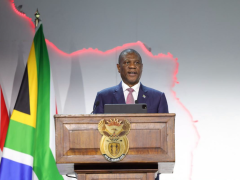
world-renowned economist
Dambisa Moyo is less
than upbeat about global
growth.
Predicting at least three
interest hikes in the US
this year – an economy she
believes is heading straight
for recession – Moyo said
the world
economic
outlook was
not positive.
“Trade
growth has
been on the
decline for
the past
ten years
and we are
continuing
to see a more
protectionist
policy
around the
world,” she
said during
a keynote address at the
Investing in Africa Mining
Indaba in Cape Town last
week. “As many as 644
discriminatory protection
policies were introduced
last year alone around the
world - largely led by the
20 largest economies.”
She said with the
world’s largest economies
– including the US and
Asia – at the
forefront
of these
constraining
measures,
it was not a
trend that
was going
to dissipate
soon.
Moyo
emphasised
the impact of
such policies
on trade
pointing out
that in the
1930s the US
had put up
3200 tariffs to block trade
from around the world.
“We know what the
consequences of that trade
regime was. We saw the US
economy decline and mass
unemployment was the
order of the day.”
With the world trade
balance changing as global
trade kept falling, Moyo
said decreasing crossborder
capital f lows and
tightening immigration
laws were compounding
the issue further.
According to the Bank of
International Settlements,
there has been a decline
of $2.6 trillion in crossborder
capital f lows,
manifesting in a reduction
in bank lending around the
world.
“This brings up questions
– especially in the
developing world – about
how governments are going
to fund infrastructure.
We are already seeing an
increase in the withdrawal
of capital from emerging
markets.”
Moyo emphasised that
the mining sector in Africa
in particular would be
hard hit if infrastructure
funding diminished.
At the same time, she
said, a more protectionist
stance in the US simply
meant a more
def lationary
environment in
Africa.
“It is critical that African
governments take note of
these trends and how they
are going to respond.”
INSERT
As many as 644
discriminatory
protection policies
were introduced last
year ― largely led
by the 20 largest
economies.
– Dambisa Moyo
‘Protectionism will land US in recession’
Comments | 0
© Now Media. This content is protected by copyright and may not be adapted or republished. If you would like to discuss cooperation opportunities, please contact: editor@freightnews.co.za.